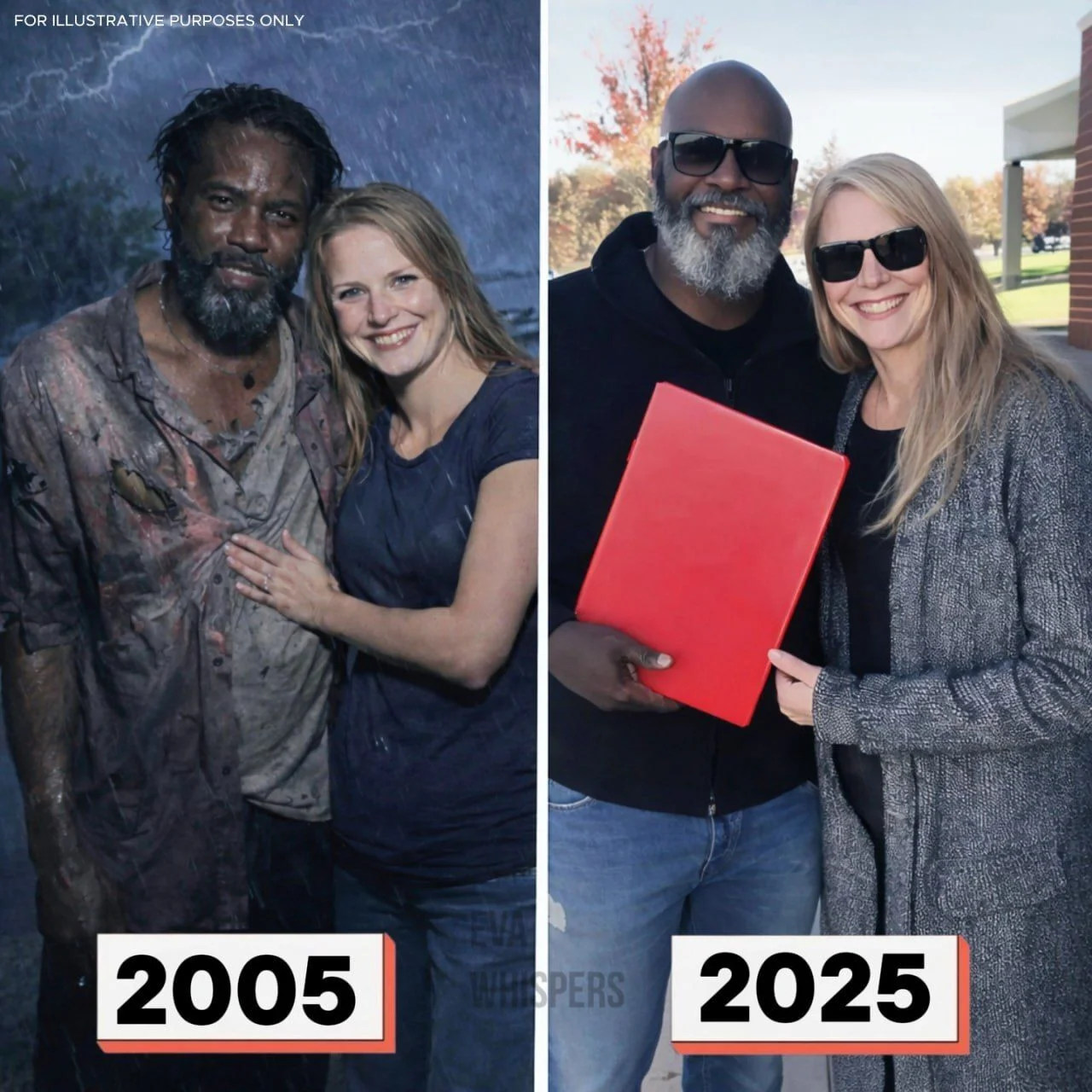
I was not trying to be a hero. I was just a young person alone in my house on a night when the rain fell so hard it seemed to want to wash the world away. The knock was so faint I almost didn’t hear it over the drumming on the roof. When I opened the door, a stranger nearly fell into my home. He was drenched, shivering, and his eyes held a hollow look that spoke of more than cold. He asked for help in a voice worn down to a whisper. Something in that broken plea overruled my fear. I let him in.
That night, I learned his name was James. I gave him what I could: warmth, dry clothes, food, and a safe place to sleep. He shared little, only that he had lost his way completely. In the morning, as he left, he vowed to repay me one day. I smiled and told him to just take care of himself. I never expected to see him again. Life moved forward, and that stormy night became a distant memory, a moment I recalled when I pondered whether small gestures really make a difference.
Twenty years later, a different kind of knock echoed through my home—firm and assured. The man at my door was poised and successful, but his smile was familiar. It was James. He had not forgotten. He had built a life dedicated to helping others escape the brink he once faced. He handed me a folder. Inside, I found the deed to a small house, a gift meant to secure my future. He explained that my simple, unquestioning kindness on his worst night had been the spark that reminded him he was still a person worth saving. He had done the hard work, but I had provided the hope.
He also showed me papers for a scholarship fund named after me, designed to give others a hand up. I was overwhelmed, insisting I had done so little. He corrected me gently: I had treated him with dignity when the world had offered him none. As he left, I understood the true lesson. Kindness is not a transaction; it is a seed. You may never see it grow, but sometimes, against all odds, it returns to you as a forest, offering shelter you never knew you had helped to plant.