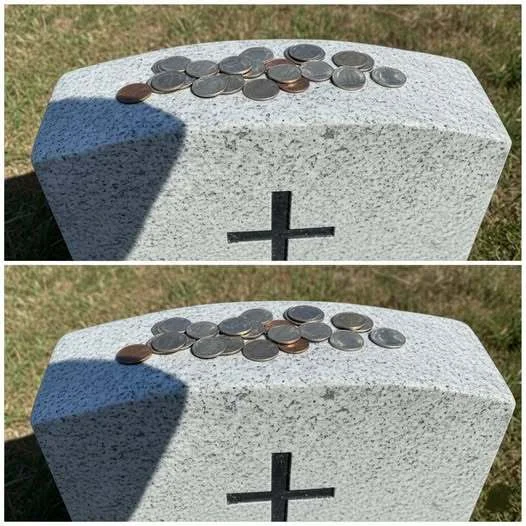
To the untrained eye, the coins scattered on a veteran’s headstone might look like clutter. But look closer. In the solemn peace of a military cemetery, these coins are carefully placed messages, a tradition rich with respect and remembrance. They transform simple change into a powerful, wordless communication between the living and the fallen, a practice that speaks volumes in its silence.
The custom has ancient beginnings, linked to old myths about coins paying a ferryman to carry souls to the afterlife. In the United States, it became a poignant ritual during the turmoil of the Vietnam War era. Many returning veterans found their grief had no public outlet, their losses met with silence or conflict. So they created their own. Leaving a coin on a comrade’s grave became a solitary, respectful act. It was a way to pay respects without fanfare, to state, “I remember,” without having to explain the depth of that memory to anyone else.
The meaning changes with the denomination, creating a subtle but clear code. A penny is a basic yet meaningful token: it says, “I came to see you.” A nickel indicates the visitor and the fallen trained together, sharing the grind of boot camp. A dime means they served together in theater, facing the realities of duty as a team. The most significant is a quarter, which communicates that the person leaving it was present at the service member’s death. This code turns everyday currency into a sacred ledger of service and shared experience.
For families walking through the rows, discovering these coins is a touching moment. It is evidence that their loved one’s sacrifice and life are honored not just by them, but by a brother or sister in arms. It shows that the community of service endures. In our fast-paced world, this tradition forces a moment of pause, of reflection. It teaches us that some of the deepest forms of honor and connection require no ceremony—just a quiet gesture, a piece of metal, and a heart that remembers.