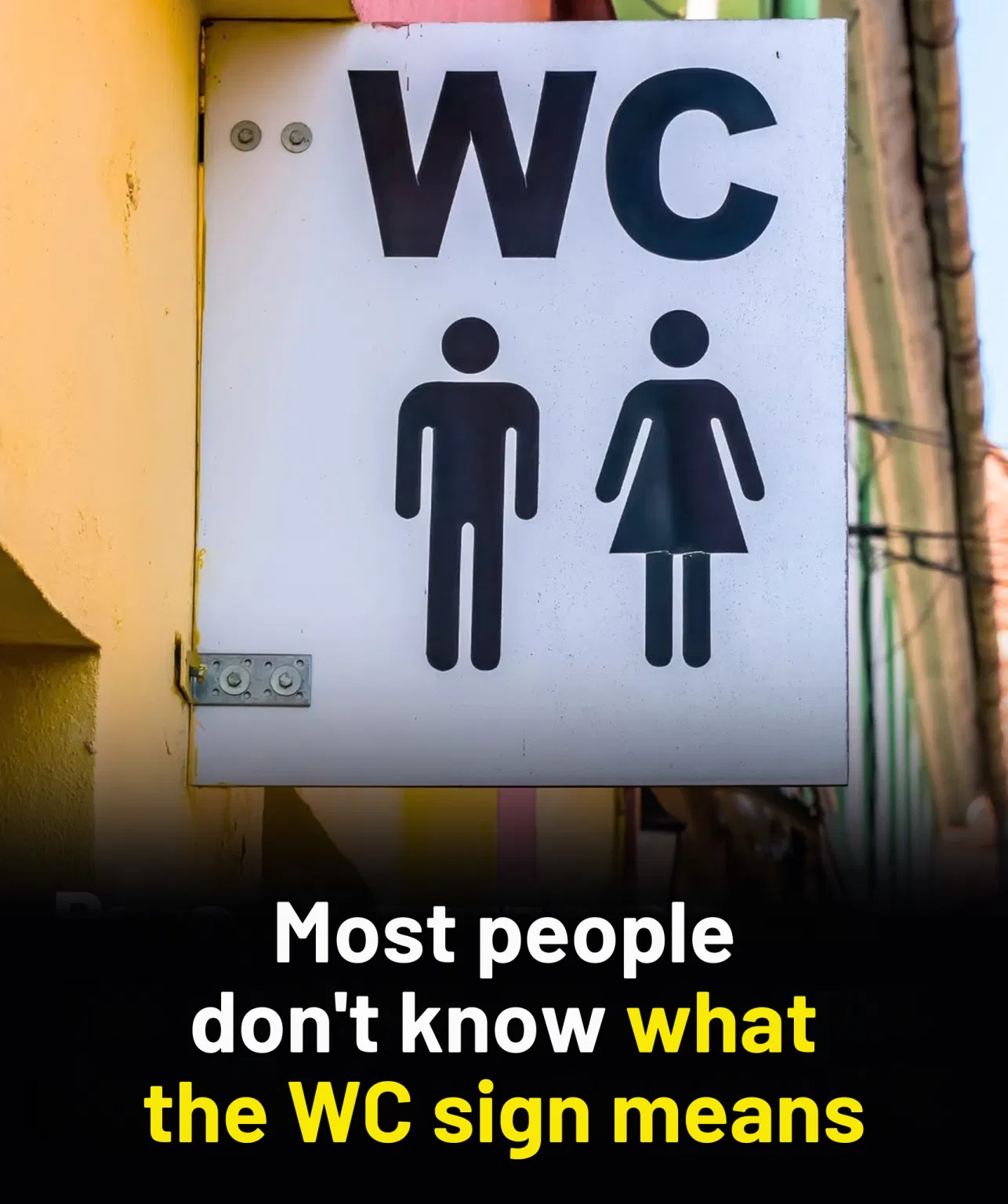
We see the letters WC everywhere. On restaurant doors, in public buildings, on station platforms. They have become so normal that most of us never stop to wonder what they actually mean. Yet those two letters carry a story rooted in the way our homes once worked.
Many people assume WC is just a modern sign for a restroom. In reality, it comes from an older English phrase. Understanding it means going back to a time when indoor plumbing was still a novelty and bathrooms were very different from what we know today.
When toilets were fitted into closets
Before running water became common, bathing was a laborious routine. Water had to be carried, heated, and poured by hand. Early bathrooms were designed only for washing. When flush toilets were introduced, homeowners faced a challenge. There was no dedicated room for them.
The practical solution was to install the toilet in a small storage space near a water source. That space was literally a closet. Because it now contained water plumbing, it was called a water closet. Over time, the long name was shortened. WC was born, and the abbreviation spread from house plans to public signs.
Why the letters never disappeared

Homes eventually changed. Toilets became part of bathrooms. Closets returned to storing clothes. But the label WC remained. It was short, clear, and easy to recognise across languages. Travellers understood it. Businesses adopted it. It became universal.
Today the letters stay with us, even though the original closet has vanished from modern design. A small historical detail quietly survived into everyday life. Once you know the origin, it is hard not to smile the next time you spot a WC sign.