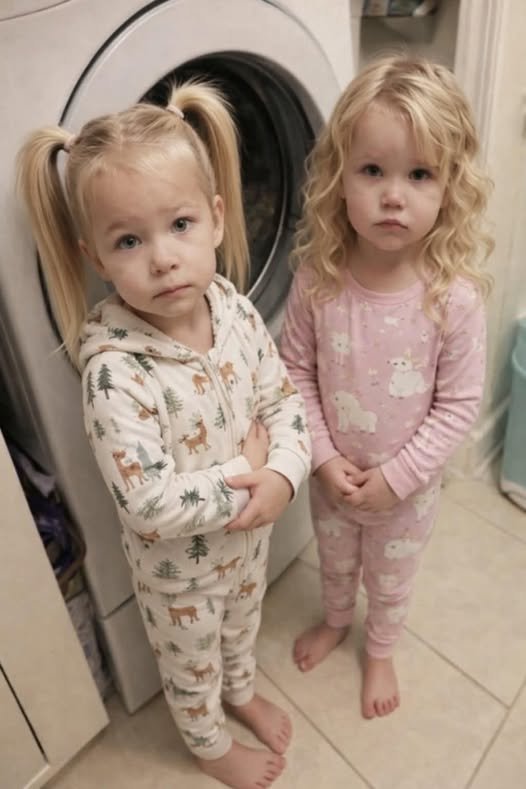
Being a single father to three-year-old twins, Bella and Lily, felt like living inside a never-ending storm. A storm made of laughter, spilled toys, sleepless nights, and constant noise. It was beautiful in its own way, but exhausting beyond words. Lately, that chaos had become heavier, pressing down on me until even breathing felt like work.
Their mother had left when the girls were still babies. She said she wasn’t built for diapers, crying, or responsibility. She walked away and never looked back. From that moment on, everything was on me—the night feedings, the messes, the doctor visits, and a remote IT job I struggled to hold together. For a long time, I told myself I was managing. That I was strong enough. But the past year had a different plan.
First came the pay cut. Twenty percent of my income disappeared overnight. Then the daycare closed when the owner retired, leaving me juggling work calls while toddlers climbed onto my lap and scribbled on my notes. Sleep became rare. Just when I thought things couldn’t get worse, my mother fell ill. A serious heart condition. Surgery was necessary, and expensive. I didn’t have the money. Every bill felt like another wave pulling me under.
The breaking point arrived quietly. One ordinary evening, the washing machine I’d owned since college made a grinding sound and stopped mid-cycle. Wet clothes sat uselessly in the drum. I stared at it, numb, knowing I couldn’t afford repairs or a replacement.
For days, I washed clothes by hand in the sink. Cold water cracked my skin. Small shirts took forever to dry. Bella cried over her stained pajamas. Lily couldn’t sleep without her clean blanket. Standing there with sore hands and detergent in the air, I felt completely defeated. There’s a kind of exhaustion that settles deeper than the body—it settles in the soul. That’s when I finally swallowed my pride and drove to a secondhand store, hoping for a miracle.
The shop was cramped and dusty, packed with mismatched furniture and old appliances. I was inspecting a dented washer when I heard a soft voice behind me.
“Looks like a daddy-and-daughters day.”
An older woman stood nearby, smiling at Bella and Lily as they played on the floor. Her name tag read Margaret. Her eyes were warm, understanding.
Without meaning to, I told her everything. The divorce. The financial strain. My mother’s illness. The broken washer. She listened without interrupting, as if my story mattered.
“You’re doing more than you think,” she said gently. “Let’s see if we can make things a little easier.”
She showed me an old white washing machine priced at $120. Scratched, worn, but sturdy. “It’s old,” she admitted, “but it should still work.”
I paid without hesitation. That night, after putting the girls to bed, I installed it and pressed start. Nothing happened. The drum didn’t move. Frustration hit hard. Then, reaching inside the drum, my hand brushed against something unexpected—a small taped box with a note on top.
“For you — M.”
Inside were two house keys attached to a red tag with an address written on it. No explanation. No message.
The next morning, curiosity won. I packed snacks, stuffed animals, and the twins into the car and followed the GPS. The drive led us to a quiet town surrounded by trees. At the address stood a small white house with green shutters and a “For Sale” sign. My hands shook as I tried the keys. They fit perfectly.
Inside, the house was warm and welcoming. Furnished. Clean. Sunlight spilled across wooden floors. On the kitchen counter lay a folded letter with my name on it.
Margaret explained that the house had belonged to her sister, Helen, who never had children but dreamed of giving her home to a family who truly needed it. When Margaret met us, she knew.
I sat on the floor and cried. Bella asked if this was our home now. I pulled her close and nodded.
Life changed from that day forward. My mother’s surgery was successful, and she moved into the guest room. The twins decorated their bedrooms. Laughter filled the halls. The house came alive again.
Months later, I went back to thank Margaret. She had retired from the shop. When I finally found her, she simply smiled and said, “Kindness is meant to keep moving.”
Today, the old washing machine still sits in our laundry room. It never worked. But I keep it. Because it reminds me that sometimes what seems broken isn’t the end—it’s the beginning of something better.
And in the quiet stillness of that silent drum, I hear a promise: kindness, once set in motion, never truly stops spinning.