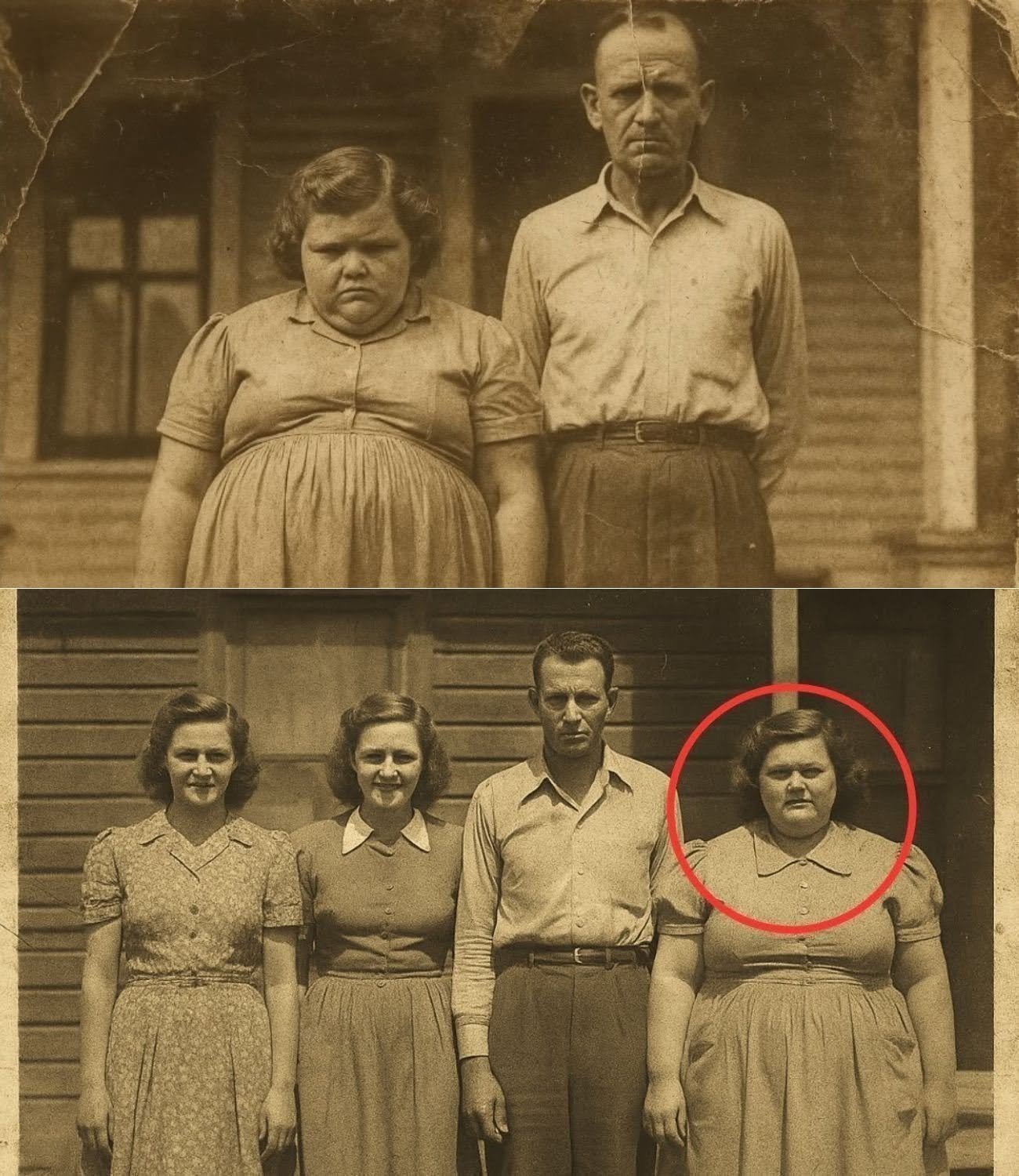
For most people in Calico Rock, Arkansas, Zinnia Smith was simply the woman with the flowers.
Every summer, her garden became one of the most beautiful places in town. Bright rows of zinnias stretched across her small property, their colors standing proudly against the old wooden fence that surrounded her home. Neighbors would slow down as they drove past. Children would stop to admire the blooms. Visitors at the county fair knew exactly whose flowers would be among the winners.
“Mrs. Smith’s garden is something special,” people would say.
And they were right.
But they only saw the flowers.
They did not see the woman who planted them.
They did not know that behind every carefully tended row was a memory. Behind every bloom was a year she survived. Behind every seed she placed into the soil was a silent promise that something beautiful could still grow from a life that had once been filled with darkness.
For more than sixty years, Zinnia carried a secret that she believed she would never speak aloud.
She carried it through marriages, funerals, Sunday church services, and countless quiet mornings alone on her porch. She carried it while neighbors called her kind, faithful, and gentle. She carried it while people praised her strength without ever knowing what strength had cost her.
At eighty-one years old, Zinnia finally decided she was done carrying it alone.
“I spent my whole life protecting a silence that was never protecting me,” she would later say.
Her story was not easy to tell.
It was not the kind of story people in small towns like to hear.
It was a story about family, control, pain, survival, and the complicated ways people learn to live after being hurt by those who were supposed to protect them.
Most importantly, it was a story about one woman who spent decades believing she had lost her voice — only to discover that her voice was the very thing that could finally set her free.
The Woman Everyone Thought They Knew
Every Sunday morning, Zinnia arrived early at First Baptist Church.
She always sat in the same oak pew near the back.
Everyone knew the spot.
If someone arrived late, they already knew where they would find her: hands folded gently in her lap, a small Bible resting beside her, quietly singing along with the hymns.
She was the woman people trusted.
When someone lost a loved one, Zinnia brought food.
When someone became sick, she visited.
When a neighbor needed someone to listen, she was there.
People described her as peaceful.
A woman who had found comfort in faith.
A woman who had learned forgiveness.
But there was a part of Zinnia that nobody saw.
The part that remembered being a little girl afraid to speak.
The part that remembered years of confusion.
The part that carried questions she had never been allowed to ask.
Small towns are often built on memories.
People remember who built the first house on the road.
They remember the families who owned the farms.
They remember celebrations, tragedies, and traditions passed from one generation to another.
But small towns also have another kind of memory.
The things nobody mentions.
The conversations that suddenly change when someone walks into the room.
The stories people whisper about but never admit they know.
Calico Rock was no different.
It was a beautiful place filled with kind people.
But kindness and silence can exist together.
Sometimes, people are willing to help someone rebuild a fence after a storm, but they do not know how to ask if that person has been living through a storm inside their own home.
For years, Zinnia was surrounded by people.
Yet she had never felt more alone.
A Childhood Built on Silence
Long before she became the woman known for her flowers, Zinnia was a young girl trying to understand a world that often did not make sense.
She grew up in rural Arkansas during a time when children were taught very clear rules.
Respect your parents.
Do not question adults.
Keep family matters private.
A family’s reputation was considered precious.
Sometimes more precious than the truth.
Zinnia learned those lessons early.
She learned how quickly a room could become uncomfortable.
She learned how certain conversations were forbidden.
She learned that some people could appear completely different depending on who was watching.
Outside their home, her father was viewed as a respectable man.
He attended church.
He spoke about morality.
He offered help to neighbors.
People trusted him.
But inside the home, Zinnia experienced a different reality.
The person neighbors admired was not always the person his family knew.
That contradiction became one of the hardest things for her to understand.
As a child, she wondered:
How could someone everyone respected make the people closest to him feel so afraid?
Children often struggle to recognize harmful situations because they grow up believing their own experience is normal.
A child does not have another childhood to compare it with.
They simply adapt.
Zinnia adapted.
She became quiet.
She became careful.
She learned how to read the emotions of people around her.
She learned when to speak and when silence was safer.
But somewhere deep inside, a small part of her knew something was wrong.
That small voice would stay with her for the rest of her life.
When Faith Was Used as a Weapon
One of the most painful parts of Zinnia’s story was the way religion was used to justify things that should never have happened.
She grew up hearing words about obedience, sacrifice, and duty.
But over time, she discovered an important truth:
Faith is meant to bring comfort.
It is not meant to erase someone’s humanity.
It is not meant to excuse cruelty.
It is not meant to force someone into suffering.
For years, Zinnia struggled with that conflict.
She loved her faith.
She found comfort in prayer.
She found peace in the church community.
But she also had to separate true compassion from the twisted explanations people sometimes create to defend their actions.
That realization took years.
Healing rarely happens all at once.
Sometimes it happens slowly, like flowers opening after a long winter.
A person survives first.
Then they understand.
Then they begin to heal.
The Children She Never Forgot
There were memories Zinnia carried that time could never erase.
Children.
The ones who changed her life forever.
The ones she remembered even when the world moved on.
People often talk about loss as if it has a deadline.
They say things like:
“You need to move forward.”
“You need to forget the past.”
But some memories do not disappear.
They become part of a person.
Zinnia remembered birthdays that were never celebrated.
Moments that never happened.
Questions that were never answered.
She remembered the love she felt, even during times when she had very little control over her own life.
That was something nobody could take away.
The world could make decisions.
Other people could create circumstances.
But nobody could erase the love inside her heart.
For decades, that love became both her greatest pain and her greatest strength.
The Garden That Saved Her
After everything she endured, Zinnia discovered something simple.
Flowers do not care where they were planted.
They do not ask whether the soil was perfect.
They simply reach toward the sunlight.
That became her lesson.
She began growing flowers seriously later in life.
At first, it was just something to do.
A reason to spend time outside.
A way to keep her hands busy.
But slowly, the garden became something more.
It became proof.
Proof that life could continue.
Proof that damaged things could still become beautiful.
Proof that the past did not have complete control over the future.
Every spring, she planted new seeds.
Every summer, she watched them bloom.
And every year, people admired the flowers without knowing what they represented.
They were not just decorations.
They were survival.
The Day She Finally Spoke
The decision to tell her story did not happen overnight.
For decades, Zinnia wondered whether speaking would change anything.
Would people believe her?
Would people judge her?
Would old wounds reopen?
Those questions kept many survivors silent for years.
But eventually, she realized something.
Silence had protected the wrong people.
It had protected appearances.
It had protected reputations.
It had protected the comfort of those who never had to carry the pain.
But silence had never protected her.
So she decided to speak.
Not with anger.
Not with a desire to destroy anyone.
But with the quiet strength of someone who had finally accepted that her life mattered.
Her story was not only about what happened to her.
It was about what she became afterward.

The Town Had to Listen
When Zinnia finally shared her truth, people in Calico Rock reacted in different ways.
Some were shocked.
Some struggled to understand.
Some wondered how they could have lived beside someone for so many years and never known.
But Zinnia did not blame everyone.
She understood something many people forget:
Not every secret is hidden because people do not care.
Sometimes secrets survive because people are afraid to ask difficult questions.
Sometimes communities mistake silence for peace.
But true peace cannot exist without honesty.
The town that once only knew Zinnia as the woman with flowers began seeing something deeper.
They saw courage.
They saw survival.
They saw a woman who had carried a burden most people could never imagine.
A Different Kind of Legacy
Today, when people remember Zinnia Smith, they do not only remember her garden.
They remember her honesty.
They remember her courage.
They remember that behind every person is a story they may never have heard.
The elderly neighbor.
The quiet person at church.
The person who always smiles.
Sometimes the strongest people are not the ones who never suffer.
They are the ones who suffer, survive, and still choose kindness.
Zinnia spent decades believing her past defined her.
Eventually, she learned the truth.
Her past was only one chapter.
It was not the entire book.
The Flowers Still Bloom
Every year, the zinnias return.
Bright.
Colorful.
Standing tall beneath the Arkansas sun.
Visitors still stop to admire them.
They still comment on how beautiful they are.
But now, those flowers mean something more.
They are reminders that even after the hardest seasons, life can return.
They are reminders that a person can be hurt without being destroyed.
They are reminders that telling the truth after years of silence can be an act of courage.
Zinnia Smith spent most of her life hiding behind a garden.
But in the end, the flowers did not hide her.
They revealed her.
They showed the world what she had always been:
Not a victim of her past.
Not a secret someone else controlled.
But a survivor who finally found the courage to bloom.