At 5:12 a.m., pounding shook my door—the kind of sound that ruins lives. My daughter, Lila, was half-asleep behind me when two police officers asked what she had done the day before. My mind raced straight to the worst possibilities.
Everything I have is my daughter. I had her at 18.
My parents—wealthy, polished, obsessed with appearances—looked at me like I had dragged dirt into a museum when I got pregnant.
My mother said, “You ruined your life.” My father said, “You will not do the same to this family.”
I stood with one hand over my stomach and said, “This is your grandchild.” My father laughed. “No. This is your consequence.”
That was the last night I lived in their house.
After that, it was cheap apartments, double shifts, thrift stores, and babysitters I could barely afford. I worked mornings at a diner, nights cleaning offices, and came home smelling like coffee and bleach.
But Lila grew up in all that and somehow came out softer than I ever was.
She’s 14 now—smart, funny, and too generous for her own good. One week she was collecting blankets for the animal shelter.
The next, she asked if we had extra canned food because, “Mrs. Vera says she’s fine, but Mom, she isn’t fine.”
Last weekend, she came home quiet. Not sad—just thoughtful.
She dropped her backpack and said, “Mom, I want to bake.” I smiled. “That’s not exactly new.” “A lot.” “How much is a lot?” “Forty pies.”
I laughed. “No.” She didn’t.
I turned. “You’re serious.” She nodded. “One of the women at the nursing home said they haven’t had homemade dessert in years. And one man said his wife used to make apple pie every Sunday.”
I could hear the rest coming.
Lila folded her arms. “It makes people feel remembered.” I stared. “Forty pies?” “Thirty-eight,” she said. “But 40 sounds better.”
She brightened. “I checked the store app. If we buy the cheap flour and the apples on sale, and if I use my babysitting money—” I cut in. “You already planned this?” “Maybe.”
I sighed. “We don’t have enough pie tins.” She grinned. “Mrs. Vera said we can borrow hers.” “You already asked Mrs. Vera?” “Maybe.”
I pointed. “You are exhausting.” She hugged me. “Please.”
I held out for three seconds. Then I said, “Fine. But when this kitchen becomes a disaster, I want it noted that I had concerns.” She kissed my cheek. “You’re the best.” “No,” I said. “Just weak.”
The Baking
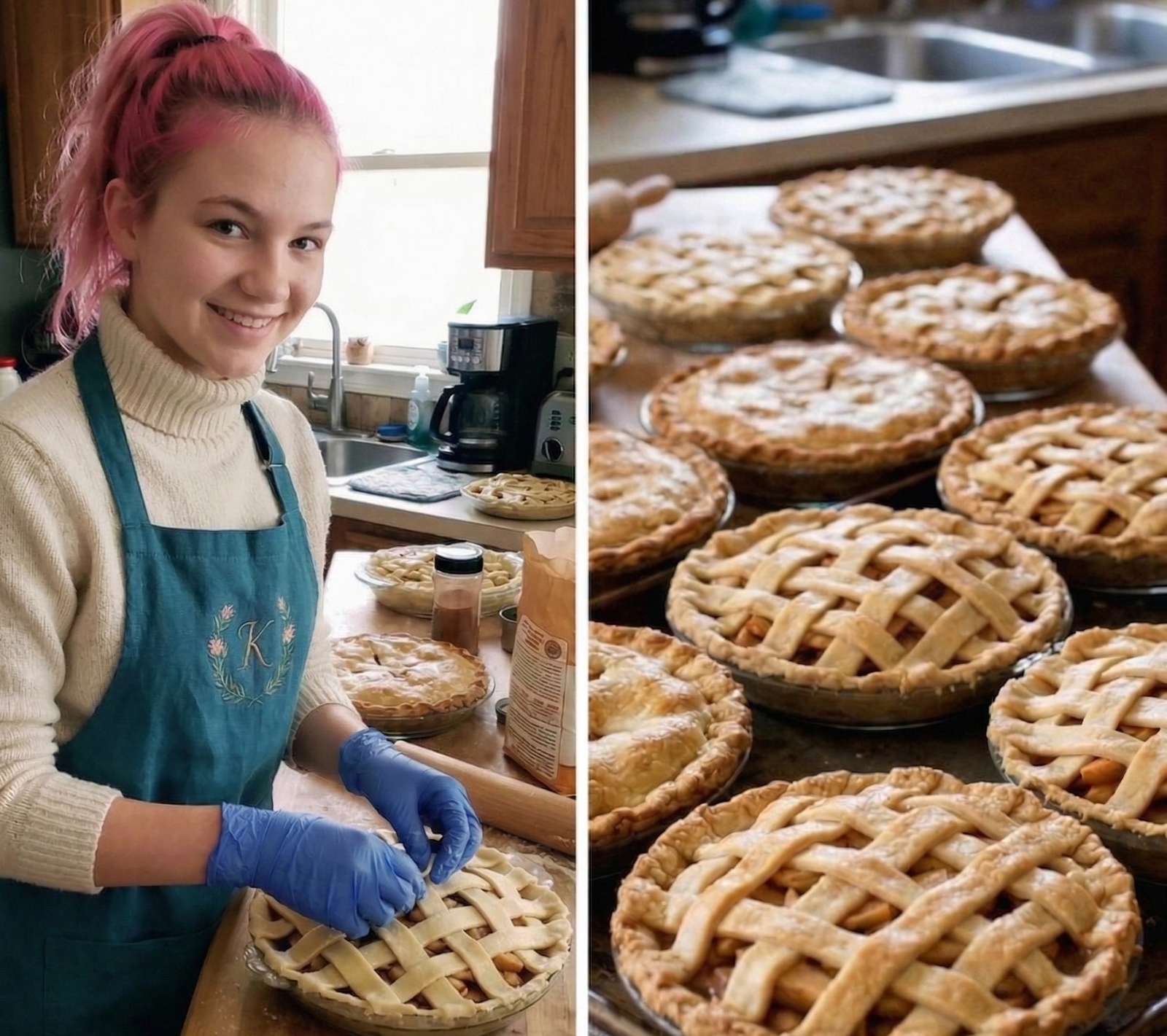
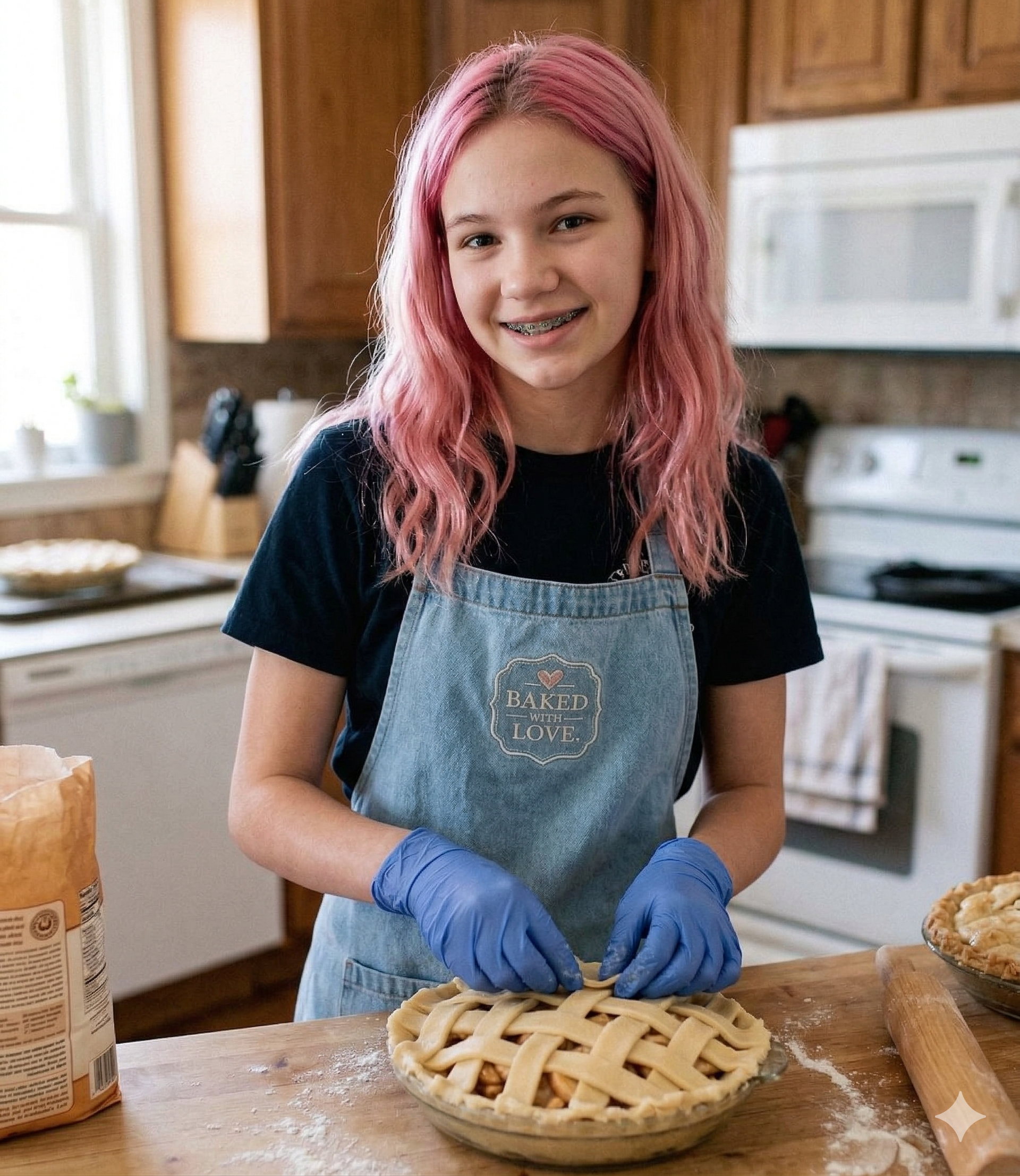
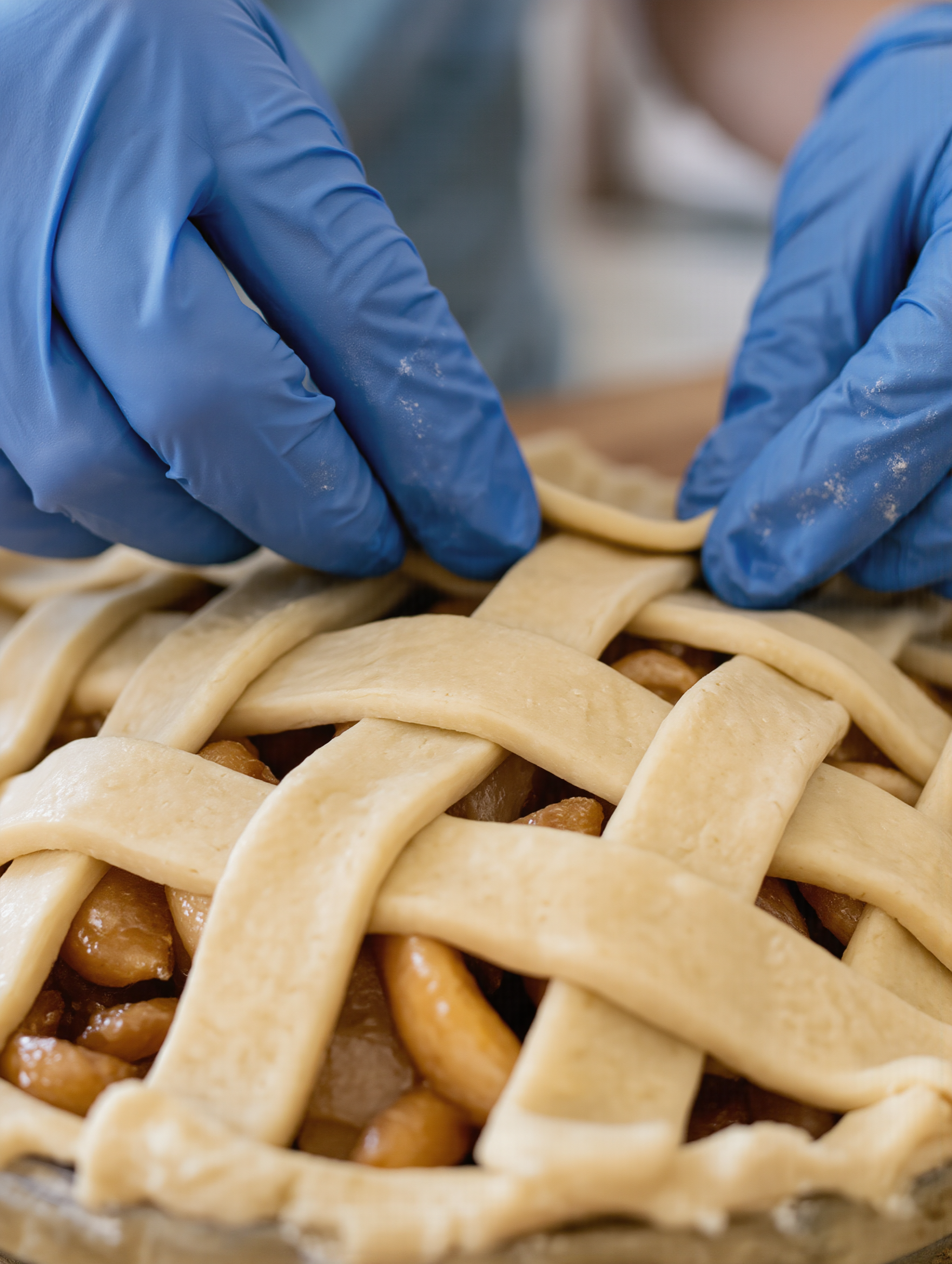
Saturday morning looked like a flour bomb had gone off. Apples everywhere. Cinnamon in the air. Dough on the counter, the floor, even the cookie jar. Lila had flour on her nose and forehead.
I said, “How is it on your forehead?” She wiped her cheek. “Is it?” “That is not your forehead.”
By pie number 26, I muttered, “Next time, write a card.” Lila laughed. “You’re doing great.”
At one point, she got quiet, rolling crust with that look she gets when she’s feeling something too big to say.
I asked, “What’s going on in that head?” She kept working. “Do you ever worry people feel invisible?” I stopped peeling apples. “What do you mean?” She shrugged. “Everybody says kids need attention, and they do. But old people do too. Sometimes I think people stop looking at them like they’re still themselves.” I looked at her. “Yeah. I think that happens.” She nodded. “I don’t want that to happen around me.”
When we loaded the pies into Mrs. Vera’s hatchback, the car smelled like butter and cinnamon.
At the nursing home, the woman at the front desk blinked. “Good Lord.” Lila smiled. “We brought dessert.” “All of this?” Lila nodded. “If that’s okay.” “Honey, okay is not the word.”
They led us into the common room. Some residents played cards. Some stared at the television. Then the smell hit. Heads turned.
One man in a navy cardigan stood. “Is that apple?” “Yes, sir,” Lila said. He put a hand over his mouth. “My wife used to bake apple.”
A tiny woman near the window said, “I smelled cinnamon before I saw you.”
Lila set the first pie down and started cutting slices. She knelt, asked names, listened.
The man in the cardigan took one bite, closed his eyes, then reached for Lila’s hand. “I haven’t had pie like this since my Martha died.” Lila squeezed his fingers. “Then I’m glad you had it today.” He swallowed hard. “What’s your name, sweetheart?” “Lila.” “I’m Arthur.” “Nice to meet you, Arthur.”
He looked at her a long moment. “You’re somebody’s answered prayer.”
That almost broke me.
Later, while cleaning the last pie pan, she hugged me. “You never gave up on me.” I turned. “Never.”