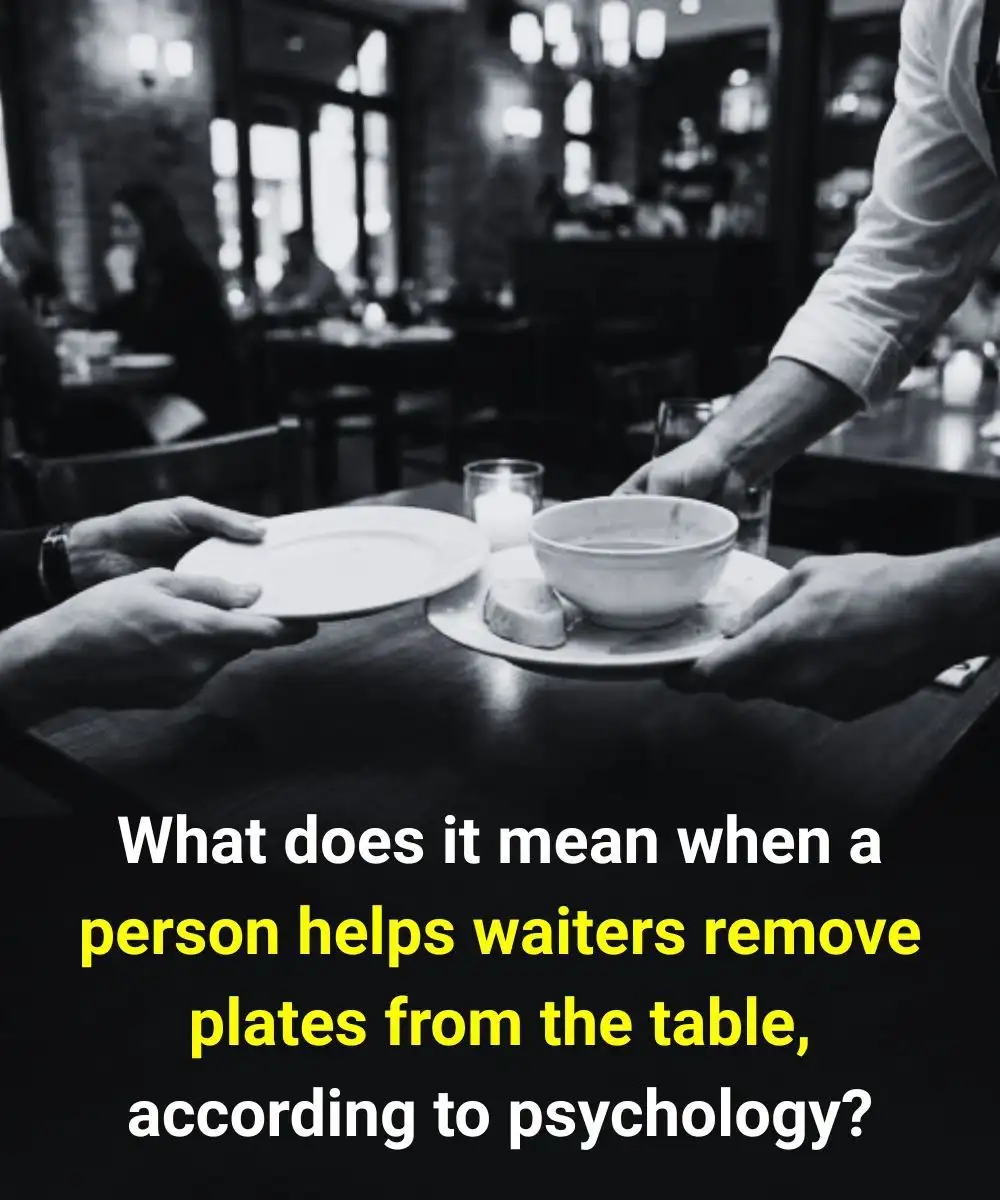
We’ve all seen it—or perhaps we’ve been the one to do it. You’re finishing a meal at a busy café or a formal dinner party, and as the server approaches, you instinctively start stacking your side plates or handing over your empty dish to make their job easier. On the surface, it’s a simple act of politeness. But have you ever wondered what that split-second decision says about the wiring of your brain?
In the world of behavioral psychology, small, subconscious actions are often the loudest indicators of personality. When it comes to the “plate-clearing” phenomenon, the debate usually boils down to two categories: Introverts and Extroverts. While both may perform the same helpful act, the psychological “why” behind it reveals a world of difference.

Is it a drive for connection or a need for comfort? Psychology suggests the answer is in the motivation.
1. The Introvert Perspective: Managing the “Social Space”
For an introvert, a restaurant isn’t just a place to eat; it’s a high-stimulation environment where every interaction requires a bit of “social battery.” When a waiter stands over the table to clear plates, it creates a moment of forced proximity. For someone who values personal space and quiet observation, this can feel slightly intrusive or awkward.
Why introverts reach for the plates:
- Reducing Attention: By helping, they speed up the process. The faster the plates are cleared, the sooner the “spotlight” moves away from them.
- Easing Invisible Tension: Many introverts feel a sense of guilt being “served.” Helping restores a sense of egalitarian balance, making them feel like a collaborator rather than a focal point.
- Avoiding Small Talk: A busy hand often means a quiet mouth. If they are busy stacking, there is less pressure to engage in the standard “How was everything tonight?” banter.
2. The Extrovert Perspective: The Joy of Connection
Extroverts navigate the world through outward energy. For them, the waiter isn’t a distraction; they are another person to engage with. Helping clear the table is less about “ending the interaction” and more about “enhancing the connection.”

Extroverts often use helpful gestures as a bridge to start a conversation or show warmth.
Why extroverts reach for the plates:
- Building Rapport: Helping is a social “olive branch.” It’s often accompanied by eye contact and a friendly remark, turning a service task into a team effort.
- Expressing Warmth: Extroverts thrive on being liked and perceived as “helpful” or “charismatic.” This gesture reinforces their social identity as a considerate person.
- Teamwork Energy: They genuinely enjoy the collaborative nature of a group setting. Pitching in feels natural and energizing rather than draining.
3. Internal vs. External Motivation: The Great Divider
So, does clearing plates make you an introvert or an extrovert? The answer is neither. Personality is defined not by the action, but by the source of the energy. Psychologists look at the internal vs. external drive:
If your thought is, “Let me help so this interaction goes smoothly and I can go back to my conversation,” you’re likely leaning toward introversion. You are managing your internal comfort.
If your thought is, “I want to show this person I appreciate them and be a part of the action,” you’re likely leaning toward extroversion. You are seeking an external bond.

Regardless of personality, the act of clearing plates is a hallmark of high emotional intelligence.
4. The Common Thread: High Emotional Intelligence
Regardless of where you fall on the spectrum, this habit reveals something universally positive: High Emotional Intelligence (EQ). People who help waiters are typically “high-monitor” individuals. They are attuned to the needs of others, aware of the workload of service staff, and empathetic toward those around them.
It shows you aren’t just living in your own bubble—you are observing the environment and asking, “How can I make this better?” That kind of social awareness is a valuable trait in any personality type.
Conclusion
Psychology proves that even our smallest table manners are windows into our souls. Whether you clear plates to find a moment of peace (introvert) or to spark a moment of kindness (extrovert), the gesture is a win for everyone involved. It turns a routine service into a human connection. So, the next time you reach for that salad plate, take a second to ask yourself: what’s your “why”?
Note: All images used in this article are AI-generated and intended for illustrative purposes only.
Disclaimer: Content is provided for informational purposes only and is not intended as a substitute of medical advice. Seek guidance of your doctor regarding your health and medical conditions.