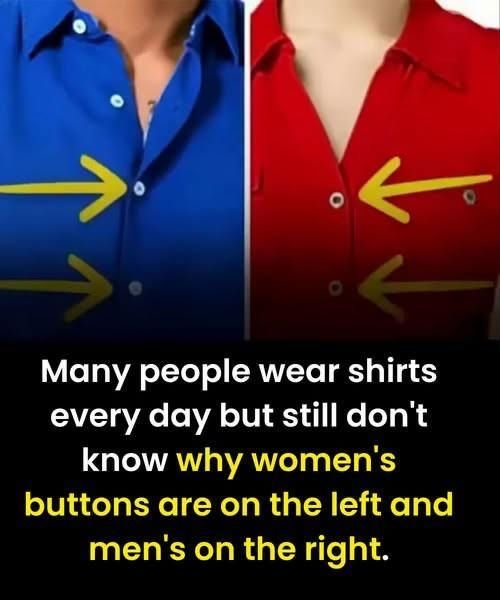
Open your closet and you’ll find a quiet historical divide hanging there: shirts that button right-over-left, and shirts that button left-over-right. This is one of the most consistent and unexamined rules in clothing. The split is gendered, but its origins have little to do with modern ideas of gender and everything to do with the forgotten daily realities of power, service, and survival in centuries past. This simple feature is a fascinating case study in how practical solutions evolve into unshakeable tradition.
The story for women’s shirts begins in the world of luxury and assistance. Before the 20th century, fashionable women’s attire was an elaborate production. Dresses featured countless tiny buttons, often sewn onto the back or a tight bodice. Since wealthy women had maids to help them dress, tailors designed garments with the assistant in mind. Placing the buttons on the left panel (as worn) made them easier for a right-handed maid to fasten while standing in front of her employer. This considerate design for the dresser became codified. Over generations, it transitioned from a marker of having household staff to simply being “the way women’s clothes are made,” a standard that outlasted its original social context.
For men, the standard was forged from a need for swift, unimpeded movement, particularly for those who bore arms. In a society where gentlemen carried swords, efficiency in drawing one’s weapon was paramount. A right-handed man wearing his sword on his left hip benefited greatly from a jacket or shirt that opened with the right side over the left. This allowed his right hand to cross his body and push the garment open cleanly, providing instant access to the weapon’s hilt. This functional design, rooted in defense and dueling, became a cornerstone of men’s tailoring, symbolizing a pragmatic and active lifestyle long after the everyday carry of swords ended.
In the 21st century, the reasons for these designs are museum pieces. Self-reliance is the norm, and the sword has been replaced by the smartphone. Yet, the buttoning conventions hold fast. They persist not out of necessity but because they have become embedded in the DNA of clothing design and consumer expectation. To change them would be to break a deeply understood code. This endurance is a testament to the weight of tradition in fashion—some rules are followed simply because they have always been followed, their origins fading into a charming footnote.
This everyday design element is a subtle but powerful reminder that our world is built upon layers of history. The clothes we wear are archives of social structure and practical need. Each time you fasten a button, you are, in a small way, reenacting a piece of that history—whether it’s the ritual of being dressed for a ball or the quick draw of a cavalry officer. It’s a hidden thread that connects our modern mornings to the intricate tapestry of the past.