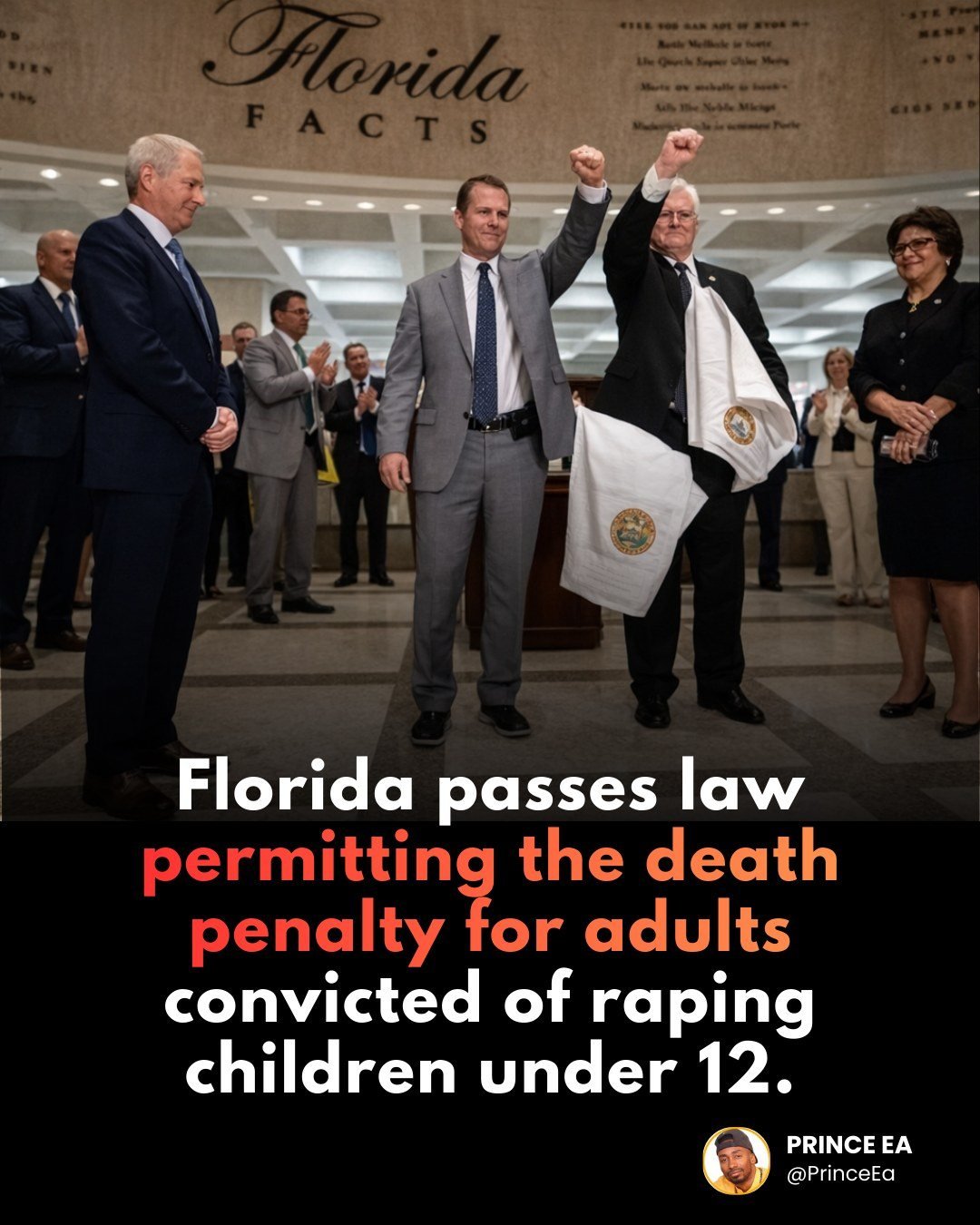
The recent passing of a law in Florida permitting the death penalty for adults convicted of raping children under the age of 12 has ignited a firestorm of debate. This law, which allows for the execution of perpetrators of one of the most heinous crimes, aims to provide a stronger deterrent against the sexual abuse of children. While many argue that it is a necessary measure to protect vulnerable children, others raise concerns about the morality of such extreme punishment and its potential societal implications.
This development forces us to examine the very essence of justice: what does it mean to truly protect our children, and what role does the state play in defining what is just? Moreover, it challenges us to consider whether justice and mercy can coexist, and whether we can build a legal system that values not just punishment but also rehabilitation and healing.
The Law and Its Rationale
The law that now allows the death penalty for those convicted of raping children under the age of 12 has been passed with the intention of deterring child sexual abuse and providing a harsher punishment for those who commit such atrocities. Proponents of the law argue that it is a necessary response to a growing epidemic of child sexual abuse and exploitation. In their view, the death penalty serves as a powerful deterrent and a way to ensure that those who harm children face the most severe consequences.
Florida’s new law, however, is not without its critics. Opponents argue that the death penalty is a barbaric and extreme response, one that fails to address the root causes of crime and offers little opportunity for rehabilitation. Furthermore, there are concerns that this law could be applied unfairly or even lead to wrongful convictions, given the irreversible nature of the death penalty.
The Complexities of Justice and Retribution
The debate surrounding the death penalty for child rapists is not just about the punishment itself, but about the broader question of justice. What does justice truly mean, and how should it be measured? Is justice purely about retribution, or is it also about rehabilitation, redemption, and healing?
At its core, the death penalty is a form of retribution, a punishment meant to repay the harm done by the criminal. This form of justice is deeply rooted in the belief that certain crimes are so heinous that only the ultimate penalty can provide closure for the victim and society as a whole. For those advocating for the death penalty in cases of child rape, this belief is often tied to a desire for justice for the child victim, as well as a belief that such extreme measures are necessary to protect society from future harm.
However, while retribution may offer a sense of closure, it does not address the deeper issues that contribute to crime. It fails to provide an opportunity for the perpetrator to understand and atone for their actions, and it does nothing to prevent future crimes from occurring. As a society, we must consider whether this form of justice truly serves the greater good, or if it simply perpetuates a cycle of violence and suffering.
The Moral Dilemma: Justice vs. Mercy
One of the most challenging aspects of this debate is the tension between justice and mercy. On the one hand, we have a moral obligation to protect our children and ensure that those who harm them face appropriate consequences. On the other hand, we must also consider the long-term implications of using the death penalty as a solution to crime.
Justice is not simply about punishing those who have committed crimes; it is about creating a society where people are held accountable for their actions, but also given the opportunity to heal, learn, and grow. The death penalty, by its very nature, removes this possibility of rehabilitation, leaving little room for redemption or remorse.
Mercy, on the other hand, acknowledges the inherent value of every human life, regardless of the crimes they have committed. Mercy recognizes that people are capable of change, and that the path to healing and reconciliation is often more complex than simply inflicting suffering on those who have caused harm.
The question, then, is not just about whether the death penalty is an appropriate punishment, but about how we define justice. Is justice truly served when we focus solely on retribution, or should our legal system prioritize healing, redemption, and the prevention of future harm? This is the moral dilemma at the heart of the death penalty debate.
The Long-Term Impact of Extreme Measures
While it is important to address the suffering of victims, we must also think about the long-term effects of extreme measures like the death penalty. How does justice serve society as a whole? Does it promote healing, or does it perpetuate a cycle of violence and retribution?
The death penalty may provide a sense of closure in the short term, but it fails to address the root causes of crime. By focusing solely on punishment, we ignore the need for prevention and rehabilitation. In the case of child rape, this means failing to address the factors that lead individuals to commit such heinous acts in the first place. What can we do to prevent child abuse and exploitation before it occurs? How can we create a legal system that prioritizes prevention, support for victims, and the rehabilitation of offenders?
Furthermore, there is the question of fairness. The death penalty is irreversible, and there have been numerous cases of wrongful convictions leading to innocent people being executed. In a legal system where mistakes can happen, is it wise to allow the state to have the power to take a life?
As a society, we must ask ourselves whether our pursuit of justice is truly effective, or if it is simply a reaction to our deepest fears and desires for vengeance. Are we willing to pay the price of irreversible punishment for the sake of perceived justice, or can we find a more humane and effective way to protect our children?
Building a Legal System That Promotes Healing
Rather than focusing solely on retribution, we must consider how to build a legal system that promotes healing for both victims and perpetrators. This is not to say that those who commit heinous crimes should not face consequences for their actions; they must. But justice should be multifaceted, focusing not just on punishment, but also on rehabilitation and prevention.
For victims of child rape, justice is not just about punishing the perpetrator. It is about providing them with the support and care they need to heal from their trauma. It is about creating systems that help them rebuild their lives, regain their sense of safety, and find hope for the future.
For those who commit crimes, justice should not be solely about retribution. It should be about offering them the opportunity to understand the impact of their actions, to atone for their wrongs, and to rehabilitate. A legal system that offers opportunities for rehabilitation helps prevent future crimes and fosters a culture of responsibility and accountability.
A Path Forward: Balancing Justice and Mercy
The debate over the death penalty for child rapists forces us to confront difficult questions about the nature of justice, the role of the state, and the limits of retribution. While we must remain vigilant in protecting our children and punishing those who harm them, we must also strive to build a legal system that promotes healing, rehabilitation, and prevention.
Ultimately, the path forward lies in finding a balance between justice and mercy, between protecting victims and offering offenders a chance for redemption. This is a challenge, but it is one that we must confront if we hope to create a society that is both compassionate and fair, a society that values both justice and healing.