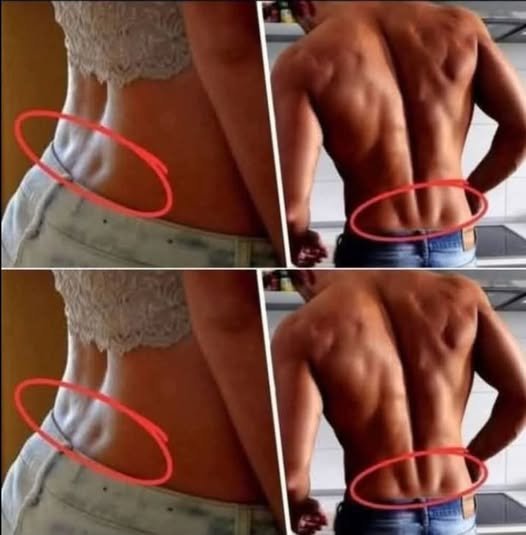
Look at a classical sculpture or a Renaissance painting, and you might spot them: two delicate dips flanking the spine just above the hips. In the human form, these are known as back dimples, and they are one of anatomy’s most subtly artistic features. More than a curiosity, they are a direct visual connection to our skeletal framework, a window showing how the skin softly yields to the anchor points beneath. Their presence has long been interpreted as a stroke of natural beauty, but the science behind them is equally compelling.
The existence of these dimples is a matter of genetic lottery. They appear in individuals whose skin has a short, direct attachment to a specific pelvic ligament. Because this structural detail is inherited, these dimples often run in families. You can’t will them into existence through workouts, though achieving a leaner physique might certainly chisel them into sharper relief. Their unpredictability and natural origin are what lend them an air of special, unmanufactured charm.
Culturally, these indentations have carried weight for centuries. The feminine variant, dubbed the “dimples of Venus,” linked them to ideals of allure and reproductive vitality. In men, the associated “dimples of Apollo” connected them to masculine beauty and prowess. These mythological labels are telling—they show how humanity has always sought to find meaning and omen in the physical body, translating simple traits into narratives of divine favor or idealized attributes.
It’s important to demystify any health claims. While some suggest they may indicate good circulation due to their proximity to vascular pathways, there is no conclusive medical evidence that they confer an advantage or signal superior wellness. They are, in the purest sense, a cosmetic variant of normal anatomy. This neutrality is liberating; it means they can be appreciated purely for their aesthetic contribution without the burden of presumed biological superiority.
In the end, these dimples are a testament to the body’s quiet elegance. They remind us that our form is a blend of blueprint and expression. For those who have them, they can be a source of personal pride, a unique identifier. For everyone else, they stand as an example of the wonderful variety in human design. They teach us to look closer, to appreciate the small, inherited details that make each person’s physical story beautifully their own.