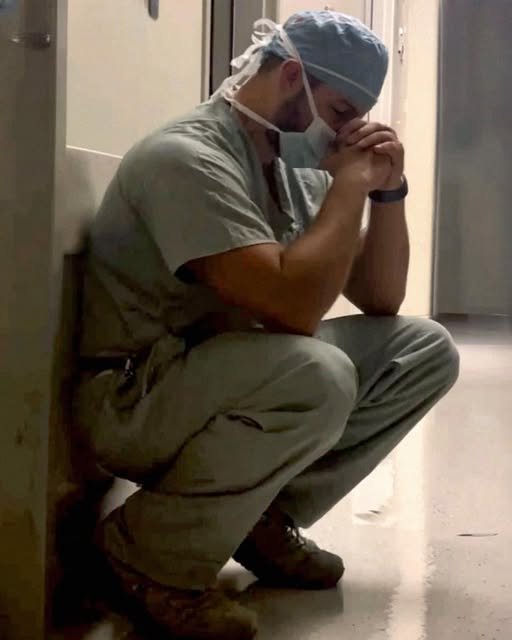
My career was defined in a single night: a five-year-old boy, a torn aorta, and the frantic, precise dance of my first independent surgery. He survived, leaving with a scar on his face and my high school sweetheart, his mother Emily, with a gratitude that echoed for years in a saved thank-you note. I moved forward, building a reputation as a unflappable surgeon, yet always feeling the ghost of that night—the weight of that young life in my hands. I never imagined our paths would cross again in a storm of rage and emergency.
Twenty years later, exhaustion had me in its grip after a long shift. In the chaotic hospital drop-off lane, a young man’s furious scream cut through my haze. He was yelling at me to move my car, his words laced with a venom that felt personal. Then I saw the pale line cutting across his face, and time collapsed. It was Ethan, the boy from the table, now a man consumed by anger, directly blaming me for every hardship in his life. The accusation was a surreal and brutal twist to a memory I held sacred. But the crisis in his car—his mother, unconscious and dying—snapped us both into a new, terrifying reality.
We became an unlikely team in a heartbeat. He sped to the doors as I raced inside to alert the trauma bay. It was only as we were prepping her for surgery that I saw her face clearly. Emily. The woman I’d loved as a teenager, the mother I’d comforted in a sterile hallway, was now on the verge of death from a dissecting aorta. The irony was a cruel, full-circle moment. With the vascular team unavailable, the Chief looked to me. There was no question; I would be her surgeon. The boy I saved was now waiting for me to save his mother.
The operation was a grueling testament to focus. Every suture was a plea, every clamp a prayer. When we finally stabilized her, the word “stable” echoed with the same profound relief it had two decades prior. Finding Ethan afterward was like meeting a different man. His anger had been burned away by fear, leaving only a raw, vulnerable son. I told him she would live. When I revealed my identity, the shock on his face slowly melted into a dawning, awe-struck understanding. The villain in his story had just become the hero, again.
He spoke then of his pain, of a childhood shadowed by his scar and a broken home, and how he’d misplaced his blame onto the faceless doctors of his past. But nearly losing his mother had recalibrated his entire universe. His apology was an unburdening for us both. Now, with Emily on the mend, we have found an unexpected peace. We meet for coffee sometimes—Emily, Ethan, and I. We talk about the future, not the past. The scream in the parking lot wasn’t an end; it was a painful, necessary prelude to a long-overdue healing.