The liver is the body’s quiet superhero—it filters, cleans, and, best of all, grows back. That last trick makes it special: a living person can hand over roughly half of it, and within a few months both donor and recipient will have a nearly full-size organ again. For families facing the slow choke of liver disease, that regrowth feels like magic mixed with mercy. Instead of watching a loved one fade on a waiting list, a son, daughter, cousin, or even a neighbor can roll up a sleeve and say, “Take mine.”
Picture the moment a thirty-year-old son learns his sixty-five-year-old father’s liver is failing. There is no dramatic music, just the soft hum of the hospital corridor and a doctor explaining that time is running short. Testing starts the next week—blood type, scans, heart check, psychological review. Every exam is a hurdle, but each green checkmark lifts the family’s spirits. When the call finally comes—“You’re a match”—the son feels a surge of purpose stronger than any promotion or paycheck. Surgery is scheduled, two operating rooms are booked side by side, and the countdown begins.
On operation day the mood is oddly upbeat. Nurses joke about who will wake up first; the anesthesiologist calls the son “the hero in bed two.” In neighboring rooms surgeons work like mirror images: one clips out the left lobe of the son’s liver, the other removes the diseased organ from the father, then gently places the fresh segment in its new home. Blood vessels are stitched thinner than spaghetti; bile ducts are reattached with stitches you can barely see. After six or seven hours both patients are wheeled to recovery, family members trading updates in a waiting room that smells of coffee and anticipation.
The first weeks are a roller coaster painted in pastel hospital walls. The father’s skin loses its sick yellow tint; lab numbers trend downward like a happy stock market. The son, groggy from pain meds, discovers that laughing hurts but still insists on cracking jokes. Nurses watch for infection, fluid pockets, or clotting—small bumps that can usually be fixed with antibiotics or a quick drainage procedure. By week three the son is walking laps of the corridor, pushing an IV pole and counting each step as proof the liver is already regrowing. The father manages a full sentence without gasping, then a full meal without nausea. Every tiny win is celebrated with the enthusiasm once reserved for birthdays.
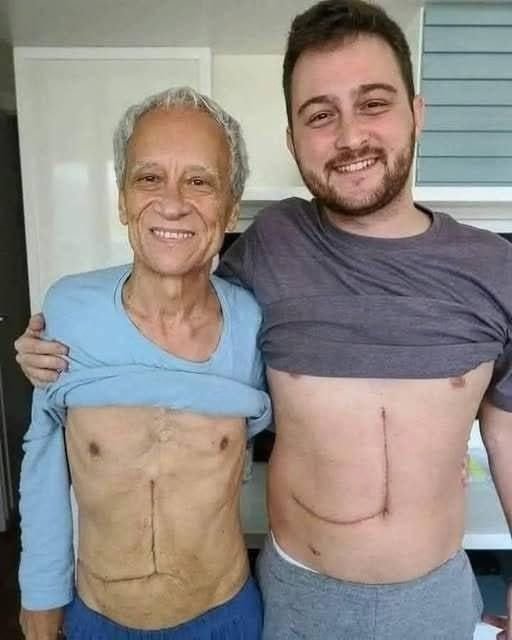
Back home the real transformation takes root. The father regains enough energy to push his granddaughter on the swing; the son returns to work with a scar shaped like a question mark and an answer he carries proudly. Both wear elastic waistbands for months because their midsections are still tender, but both also wear a quiet confidence that says, “We beat the clock.” Neighbors drop off casseroles; the local church adds their names to the prayer chain; strangers on social media send messages that read, “You gave me hope.” The son shrugs off the praise—“I just wanted Dad around longer”—but the truth is bigger: he gave his family extra years of stories, laughter, and late-night phone calls that would have fallen silent.
Living donation is not risk-free. Rare complications can send a donor back to the hospital, and recipients sometimes face rejection or recurrence of disease. Yet most who go through it say the same thing: if they had to decide again tomorrow, they would still roll the gurney down the hall. Because love, like the liver, grows back—stronger, fuller, and ready to filter whatever life throws its way.