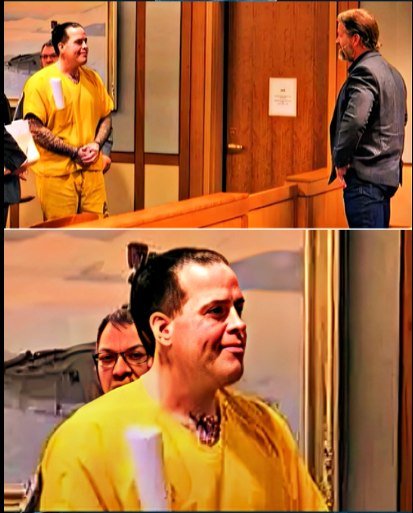
In a quiet Alaskan courtroom, a man named Jason received a decades-long prison sentence and smiled. This single gesture encapsulates the profound complexity of his story. Jason was a vigilante who targeted convicted child abusers, breaking into their homes to confront them with force. His motivation, however, was not born of malice but of searing personal history—a childhood ravaged by abuse and neglect. He viewed his violent acts as a necessary intervention, a way to protect the innocent where he believed the system faltered. His journey from a traumatized child to a convicted felon poses relentless questions about the nature of justice, the impact of trauma, and the high price of taking matters into one’s own hands.

The roots of Jason’s mission lie in a dark and painful past. He and his brother grew up in an atmosphere of fear and instability, suffering abuse that went unaddressed. This experience forged a powerful bond between them and created a deep-seated belief that the world does not protect its most vulnerable. As Jason moved into adulthood, this belief curdled into a specific grievance against the criminal justice system. Seeing offenders on a registry live in the community, he felt a simmering rage and a compulsion to act, driven by the memory of his own helplessness.
His campaign of vigilantism was deliberate and stark. Using publicly available information, Jason tracked individuals and invaded their privacy with violent intent. He carried a hammer, a symbol of both construction and destruction, believing he was dismantling a threat and building a safer community. His actions were not random outbursts but calculated strikes, each one reinforcing his self-image as a protector. This grim routine was shattered during a particularly violent encounter where the intended target fought back, leaving Jason to confront the raw, physical reality of the chaos he was creating.
Arrest and trial brought Jason’s story into the public eye, splitting opinion. The legal process was straightforward in its judgment of his crimes, but the moral assessment was murkier. In custody, Jason reflected on his path. He acknowledged the criminality of his methods but remained steadfast in the conviction behind them. He saw himself as someone who chose to bear a terrible burden—the loss of his own freedom—to potentially spare others from the horror he knew firsthand.
The powerful, silent exchange with his brother at sentencing said more than any legal argument could. That smile was an acknowledgment of shared understanding, a final communication between two survivors. It accepted the prison term as the inevitable cost of a chosen path. Jason’s legacy is not a recommendation for vigilante action, but a sobering case study. It illustrates how pain can distort perception and how the desire for justice, when untempered by law, can consume the very individual who seeks to serve it. His story remains a challenging, uncomfortable mirror held up to society’s failures and the extreme lengths to which they can push a wounded soul.