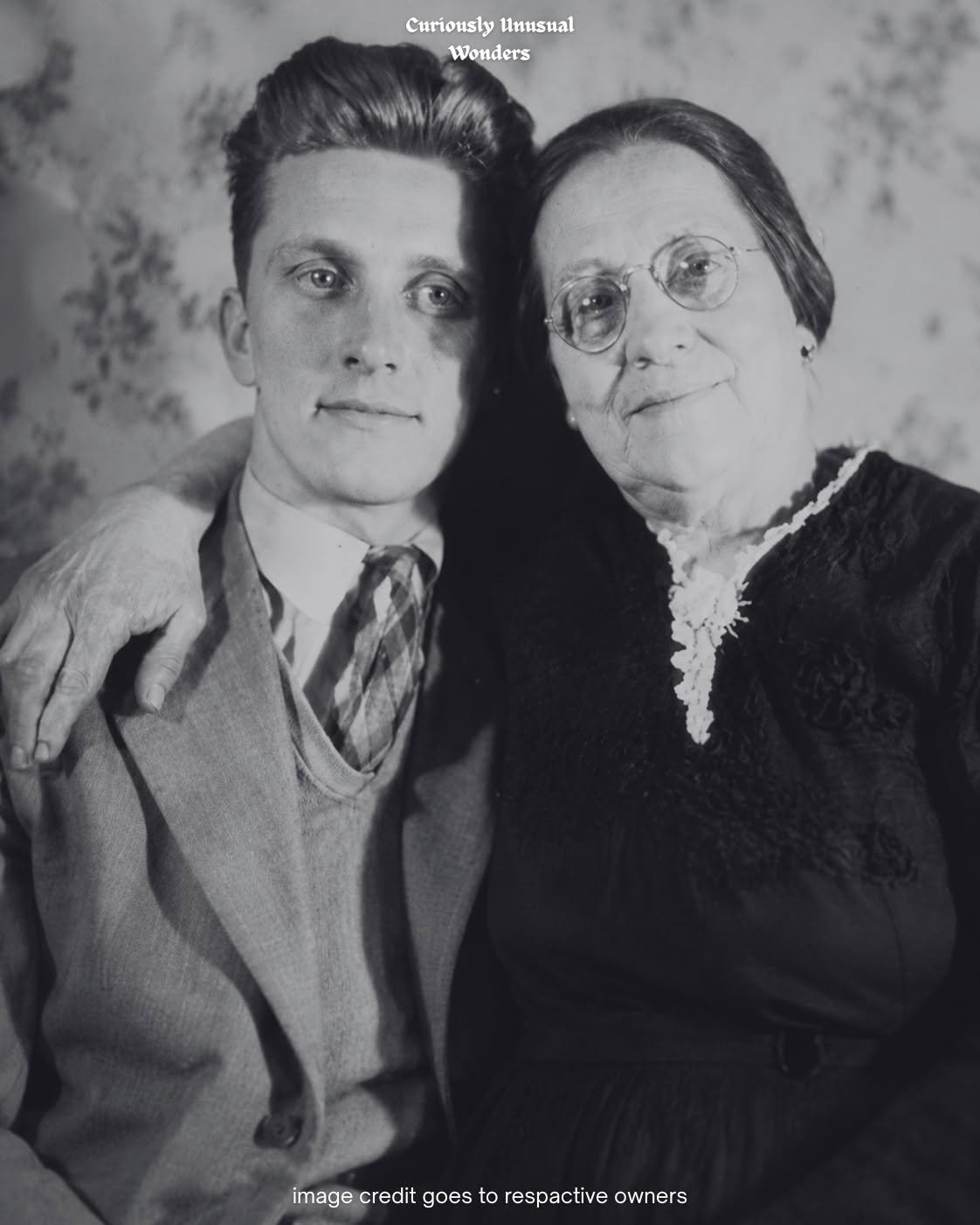
In the cramped rooms of an immigrant home in Amsterdam, New York, silence often spoke louder than conversation. Not the peaceful kind of silence, but the kind that settles into walls over years of disappointment and fatigue. Bryna Sanglel lived inside that silence like it was another piece of furniture—always present, always unnoticed. Her husband did not call her by her name. At first, it was easy to mistake it for habit, even carelessness. But habits become language, and language becomes identity, and soon enough she was no longer Bryna in the place she called home. She was just a gesture, a vague acknowledgment, a distant “hey you” thrown across rooms like a coin without value.
She had once believed names mattered. Back in the small village where she grew up in what is now Belarus, names were tied to lineage, memory, and survival. People were called properly there, even when life was hard. But America had a way of stripping things down to essentials, and sometimes essentials did not include dignity. When she arrived, she was already exhausted from the crossing, already softened by hope that had been handled too many times like fragile glass. Her husband had come first, sent money, written letters filled with promises that sounded larger than the life waiting for her. America, he said, would fix everything. America would make them new.
But America did not make them new. It made them tired in different ways.
Amsterdam, New York, was not a city of dreams but a working town built on repetition. Brick buildings that aged quickly. Streets that smelled of coal and labor. Immigrant families folded into each other’s struggles. And inside one of those small apartments, Bryna began the quiet work of survival. The kind of survival that does not announce itself. The kind that simply continues.
The Weight of a Life Shrinking in Real Time
Her husband, once respected in another country as a horse trader, had become something smaller in America. A ragman pushing a cart through alleys, collecting discarded fabric and broken things. There is a particular kind of grief that comes from watching a man shrink—not physically, but in presence, in responsibility, in dignity. What he once carried in pride, he now carried in bitterness. What he once built with confidence, he now abandoned in bottles and cards and long silences that ended in irritation.
At home, his voice became sharper, but less meaningful. Words were no longer communication but interruption. And Bryna learned quickly that survival sometimes meant becoming background noise in your own life. She did not argue. Not because she had nothing to say, but because she understood early that some arguments are never heard, only endured.
The children came quickly, as they often did in immigrant households where time moved differently. Each child was another responsibility added to a structure already bending under pressure. Bryna worked without instruction, because no one taught her what motherhood in poverty required. She learned it through necessity. Floors scrubbed until her hands cracked. Laundry taken in from neighbors who never saw the woman behind the work. Houses cleaned so others could feel order while she carried chaos back home in silence.
There were nights when food was not a question of choice but of invention. Nights when she opened empty cupboards and closed them again as if hoping something might appear through patience alone. When it did not, she improvised. Always improvised.
The Bones That Kept a Family Alive
There was a butcher not far from where they lived, and it was there that survival took on its most humbling form. Bryna would send her young son, Izzy, with a request she had rehearsed so often it no longer sounded like shame: if there were bones left over, could they have them?
Not meat. Not even scraps worth selling. Just bones. Things already discarded from value.
The butcher, accustomed to poverty as part of the neighborhood’s landscape, would sometimes oblige. And Izzy would carry them home like treasures that did not look like treasures at all. What his mother did with them was an act of quiet transformation. She boiled them for hours until the kitchen filled with a thin, stretching smell that was not quite food but not quite nothing either. The water would change slowly, reluctantly, as if even the bones resisted giving up what little they had left.
From this, she made soup. From absence, she made continuation.
Izzy watched everything. Children in such homes always do. They learn early that love is not softness, but persistence. He saw the way his mother’s hands moved even when they were swollen. He saw how she never allowed exhaustion to become surrender. And he began to understand something without being told: that his mother was holding the line between survival and disappearance.
The Boy Who Learned to Dream Anyway
There are children who inherit wealth, and there are children who inherit instruction. Izzy inherited neither. What he inherited instead was observation. He saw the world as something uneven, unfair, but not entirely closed. There were cracks in it. Small ones. And sometimes light came through.
He began to speak about dreams the way other children spoke about toys. Acting, he said one day, as if the word had always been inside him waiting for permission to exist. It was a dangerous kind of statement in a house like his. Not because dreams were forbidden, but because they were impractical. And impractical things had a way of making life harder than it already was.
But Bryna did not laugh.
She had every reason to. She had every reason to bring him back to earth, to tell him that survival was the only stable goal available to them. But something in her refused that logic. Perhaps it was exhaustion. Perhaps it was recognition. Or perhaps it was the simple belief that if life had taken so much from her, it should not be allowed to take hope from her child as well.
So she did something radical in its simplicity. She believed him.
“You can,” she told him. Not as encouragement. As instruction. As fact.
And in that moment, belief became inheritance.
:max_bytes(150000):strip_icc()/ap_16345161266418-af47a5a0f9e745d1ae1c8b4b59ea1668.jpg)
From Ragman’s Son to Something Larger Than the Street
Izzy Danielovitch left Amsterdam carrying nothing that suggested future greatness. No connections. No safety net. No guarantee that effort would lead anywhere at all. He carried only the strange internal certainty that someone had told him the truth when there was no benefit in doing so.
In time, he became Kirk Douglas.
The transformation was not sudden. It was carved slowly through rejection, persistence, and a kind of stubborn refusal to remain small. He worked odd jobs. He studied. He performed wherever he could. And gradually, Hollywood—a place that often decides identity rather than discovers it—began to notice him.
When he appeared on screen, there was something unignorable about him. A presence that suggested pressure beneath the surface, like a man constantly holding something in place. Audiences did not just watch him. They felt him.
But even as success began to accumulate, something in him remained anchored elsewhere. Not to fame. Not to money. But to the woman who had once boiled bones to keep him alive.
The Name That Finally Became Visible
In 1949, when he founded his own production company, he could have chosen any name that signaled ambition or legacy. He could have stamped his own identity onto it, reinforced the image the world already knew. Instead, he chose something else entirely.
He named it after his mother.
Bryna.
It was a decision that carried more weight than branding. It was correction. A quiet rewriting of history. A refusal to let invisibility remain permanent.
The company began its work in an industry built on illusion, but this name was not an illusion. It was real in a way that mattered more than box office numbers. It was a name that had once been spoken without respect, now printed across contracts, credits, and studio gates.
And for the first time, the word that had been reduced to absence in her own home began to exist in public light.

The Night a Name Became Larger Than a City
Years later, he took her to New York’s Times Square. The city she had once entered as an uncertain immigrant now stood transformed into something louder, brighter, and impossibly larger than memory. She was older now. Life had bent her forward slightly, as if she had spent too many years carrying invisible weight.
They stood together in the noise of traffic, lights, and movement that never stopped.
And then she saw it.
Her name, stretched across a billboard in towering letters, announcing a film: BRYNA PRESENTS THE VIKINGS.
She did not immediately understand. Not because she was unaware of language, but because she was unaccustomed to recognition. For so long, attention had been something that moved past her, not toward her. And now it was everywhere at once, written into the sky of a city she had once struggled merely to survive in.
She cried not from sorrow, but from the shock of being seen.
For someone who had lived so long as “hey you,” being named publicly was not a small thing. It was a reversal of gravity.
The Final Lesson She Left Behind
When Bryna died in 1958, she left behind no public record of fame, no wealth that explained the scale of her influence. But she left behind something more enduring. A son who understood exactly where he came from.
Kirk Douglas would go on to live a long life, to build a career that stretched across decades, to become a figure of Hollywood history. But whenever he spoke of success, he did not begin with studios or contracts or awards. He began with bones. With silence. With a woman who had no audience but still chose to believe in something larger than her circumstances.
And that is the strange inheritance she left behind: not material stability, but the idea that belief itself can become a form of survival for someone else.
Because sometimes the most important name in a life is not the one you are given at birth, or the one the world writes for you later.
It is the one someone refuses to forget, even when everything else tries to erase it.