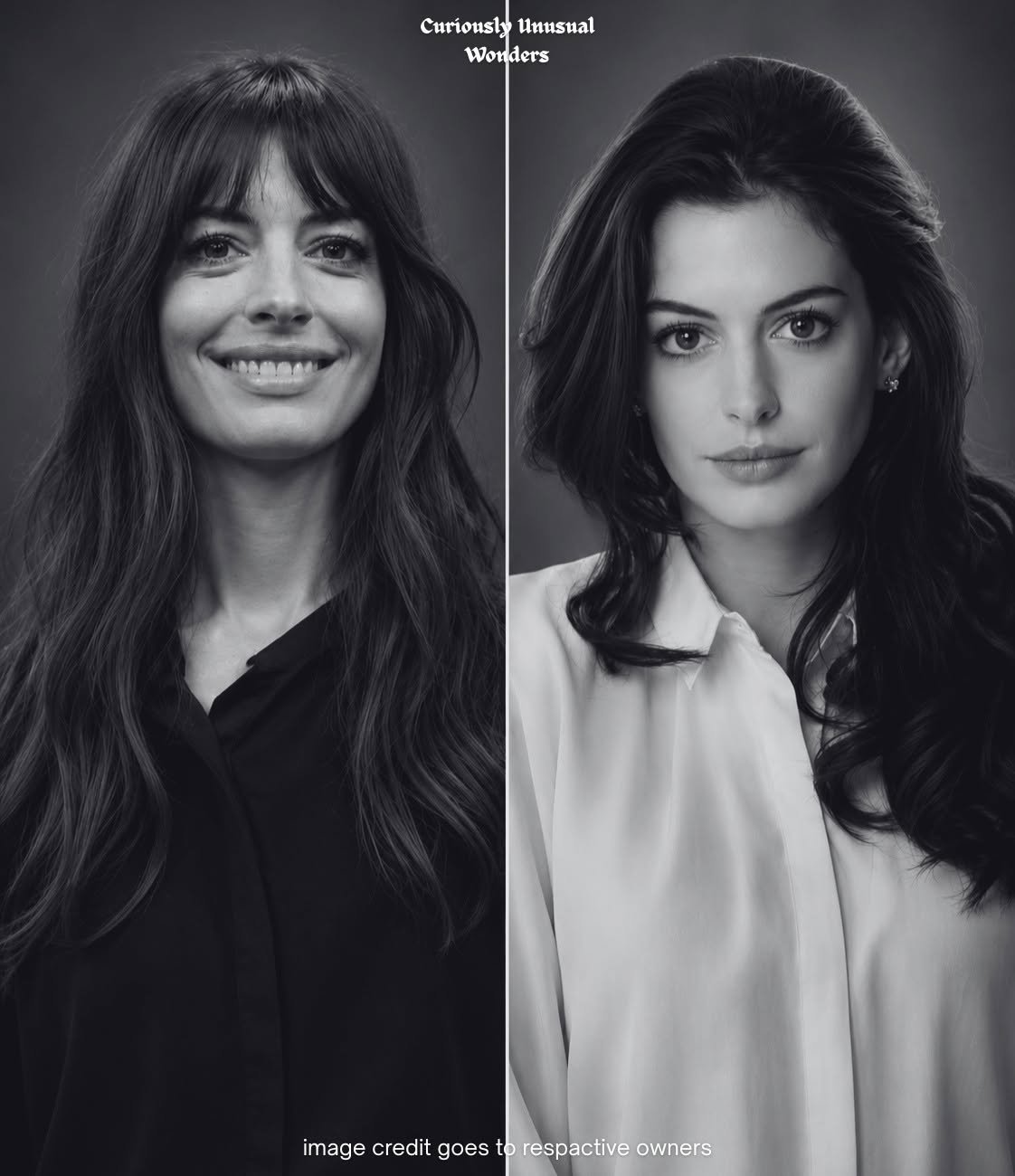
There are moments in film history that don’t just entertain audiences—they fracture expectations. They leave behind something harder to define than applause or awards. In December 2012, one of those moments quietly appeared online. It wasn’t announced with fanfare or red carpet premieres. It was a short, unedited clip of actress Anne Hathaway singing “I Dreamed a Dream” from Les Misérables.
At first glance, it looked almost too raw to be a film scene. Her head was shaved. Her face looked exhausted, almost fragile, as if the weight of the character had already consumed her before the camera even began rolling. The performance was filmed in a single unbroken close-up, with no studio polish, no emotional cushioning, no cinematic distance. Just a woman, a voice, and a breakdown that felt too real to be acting.
Within hours, millions had watched it. Many were silent afterward. Some cried. Others shared it immediately, convinced they had witnessed something rare—something that did not feel like performance at all, but confession. And yet, as quickly as admiration spread, another reaction followed. The internet, unpredictable as ever, began turning on the same woman it had just praised.
They called her “too intense.” “Too rehearsed.” “Too eager to be liked.” And suddenly, Anne Hathaway became something strange in modern celebrity culture: a performer both celebrated and rejected for the same quality—her sincerity.
But to understand how that moment happened, we need to go backward—before the Oscars, before the backlash, before she ever stepped into the world of Les Misérables.
A Career Built in Full View
Before Fantine, Hathaway was already a familiar face in Hollywood. She had grown from a young breakout star into a versatile actress with a wide emotional range. Audiences knew her from The Princess Diaries, where she played an awkward teenager turned princess, and later from more serious roles in films like Brokeback Mountain and The Devil Wears Prada. She was polished, articulate, and visibly ambitious.
But that ambition came with a cost in public perception. As her fame grew, so did online criticism. Some viewers found her overly polished, almost too perfect in interviews. Others misread her enthusiasm as performance. Slowly, a narrative formed around her—not of her work, but of her personality. She wasn’t just acting in films anymore; she was being judged outside of them for how she existed in public.
It was into this climate that she was offered one of the most emotionally demanding roles of her career: Fantine in Les Misérables.

The Role That Demanded Everything
Fantine is not a character built for comfort. She is a young woman who descends from hope into desperation, forced into sacrifice, humiliation, and emotional collapse. In Victor Hugo’s world, she is not just a supporting character—she is the emotional core of suffering that drives the entire story.
Director Tom Hooper made a decision that changed everything about how the film would be created. Instead of pre-recording vocals in a studio, actors would sing live on set. Every breath, every crack, every tremor in the voice would be captured in real time. There would be no safety net.
For Hathaway, this meant there was no hiding. No second takes that could smooth over emotion. No polished vocal performance to lean on later. If the emotion broke, the scene broke with it.
To prepare, she didn’t just rehearse lines. She studied Victor Hugo’s novel, immersed herself in the psychology of poverty and loss, and physically transformed herself. She lost a significant amount of weight under medical supervision, a process she later described as physically and emotionally draining. She cut her hair on camera in a single take—an act that wasn’t just symbolic for the character, but psychologically real for the actress performing it.
That moment alone became one of the most talked-about scenes in the film: a public stripping away of identity, filmed without interruption, as if the camera itself refused to blink.
But the hardest part was still ahead.
“I Dreamed a Dream” – When Acting Disappeared
The song “I Dreamed a Dream” is one of the most emotionally loaded pieces in musical theater. It is not just about loss—it is about the collapse of hope itself. When Fantine sings it, she is not reflecting on sadness. She is drowning in it.
On set, Hathaway reportedly struggled through early takes. The emotion was there, but not fully unlocked. The performance required something more dangerous than technique—it required surrender.
Then something shifted.
In the final takes, she stopped trying to “perform” sadness. She stopped managing her expression, stopped controlling her voice in the way trained actors often do. Instead, she allowed the character’s emotional state to take over completely.
Her voice broke. Her breathing tightened. Tears came not as a planned moment, but as an unavoidable consequence of what the scene demanded.
The crew reportedly recognized immediately that something unusual had happened. It wasn’t just a good take. It was a moment where acting and reality became indistinguishable.
When the film was completed, that scene became its emotional center.

The World Reacts: Awe First, Then Judgment
When Les Misérables premiered, the response was overwhelming. Critics praised Hathaway almost unanimously. She won major awards across the industry, including the Golden Globe, BAFTA, SAG Award, and ultimately the Academy Award for Best Supporting Actress.
Her performance was described as devastating, unforgettable, and brutally honest. Many viewers said they could not rewatch the scene without feeling physically affected.
But fame in the internet era rarely remains stable.
As her awards season visibility grew, so did a backlash that had little to do with the performance itself. Acceptance speeches were mocked. Interviews were analyzed for tone. Her visible emotion during award ceremonies was interpreted by some audiences as rehearsed or exaggerated.
A strange contradiction formed: the same emotional openness that made Fantine powerful was now being used as evidence against Hathaway’s authenticity.
She had entered a cultural paradox—being criticized for the very sincerity that had made her performance extraordinary.
The Hidden Cost of Being “Too Real”
Years later, Hathaway reflected on that period with a level of honesty that surprised many. She acknowledged that the backlash affected her deeply, not just professionally but personally. She described a period where she became more cautious, more aware of how she was perceived in public spaces.
Even more significantly, she revealed that the online reaction had real consequences in her career trajectory. Some filmmakers, she said, became hesitant to cast her because public sentiment around her had become complicated.
In an industry where perception often influences opportunity, this hesitation mattered.
For a time, it seemed as though the emotional honesty that defined her performance in Les Misérables had become a liability.
The Turning Point: A Return to Serious Cinema
Then came a shift.
Filmmaker Christopher Nolan cast her in Interstellar, a large-scale science fiction film that required emotional restraint rather than emotional explosion. The role helped reposition Hathaway within a different cinematic context—less about public persona, more about narrative function.
It wasn’t an immediate “comeback,” but it was a recalibration. Slowly, her work began speaking louder than the commentary surrounding her.
Over time, audiences began to separate the noise from the performance again.
What People Missed About Fantine
Looking back, one of the most misunderstood aspects of Hathaway’s performance is not what she did—but what she surrendered.
Fantine works not because it is controlled, but because it refuses control. It is not a performance built on distance. It is built on collapse. And that collapse is what makes it unforgettable.
What audiences saw in that clip was not just an actress crying or singing—it was a person allowing themselves to be fully consumed by a fictional life, without protection.
That level of vulnerability is rare in modern cinema, where polish often replaces risk.
The Question That Still Remains
Why do audiences admire emotional truth on screen, but sometimes reject the people who deliver it?
Why is vulnerability praised in theory, but questioned in practice?
Hathaway’s experience exposes a contradiction at the heart of modern celebrity culture: the same openness that creates iconic art can also make the artist vulnerable to misinterpretation.
Fantine lives because Hathaway gave the role everything she had. But Anne Hathaway, the person, had to live with the consequences of being seen so openly.
A Performance That Still Echoes
Today, the clip still circulates online. New audiences discover it every year, often without context. And each time, the reaction repeats itself: shock, silence, admiration, discomfort.
It remains one of the most powerful examples of live emotional performance in modern cinema—not because it was perfect, but because it was almost too human.
And perhaps that is the real legacy of the role.
Not just an Oscar. Not just awards. Not just criticism.
But a reminder that sometimes, the most unforgettable performances are the ones that don’t feel performed at all.
Final Reflection
In a world that often rewards distance, control, and image management, Anne Hathaway’s portrayal of Fantine stands as something different. It is messy, fragile, and emotionally exposed in a way that cannot be easily replicated.
She did not simply act in Les Misérables.
She allowed a character’s suffering to pass through her completely—and in doing so, created a moment that still divides audiences, still inspires debate, and still refuses to be forgotten.
And maybe that is why it endures.
Because long after the awards, the headlines, and the backlash fade, what remains is simple:
A woman. A song. A collapse of emotion.
And a performance the world still cannot stop watching.