I sat in the quiet office of Evelyn’s attorney with a worn shoebox resting on my lap. My hands shook as I stared at it, unsure whether to open it or leave it sealed forever. Outside the windows, the world carried on normally, but inside that room, my carefully constructed life was beginning to collapse.
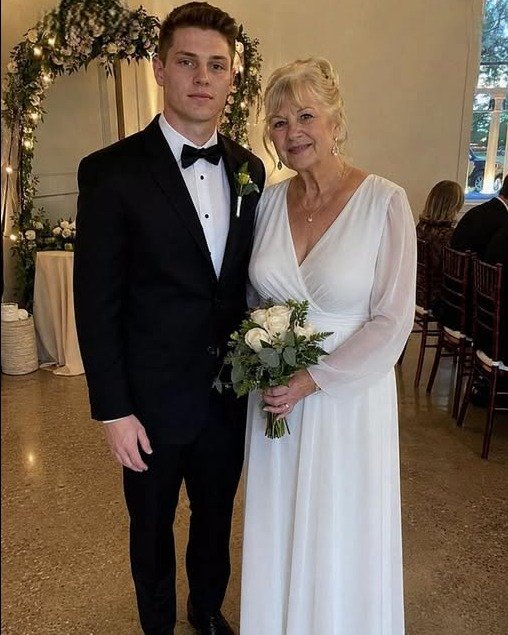
To everyone around me, I was the grieving husband — the loyal younger man who had lovingly cared for his elderly wife until the very end. Friends from church had hugged me at the funeral. Neighbors had praised my devotion. They believed I had stayed faithfully by Evelyn’s side through her final years.
But the truth was far more complicated.
I had married Evelyn for one reason: survival.

At twenty-five years old, I was broke, overwhelmed with debt, and sleeping in my truck behind a grocery store parking lot. Every day felt like another step toward failure. I had no family to lean on, no real opportunities, and no idea how to rebuild my life.
Then I met Evelyn.
She was seventy-one, kindhearted, recently widowed, and living alone in a beautiful old home on the edge of town. We met at a diner where I worked occasional shifts for tips. She came in every Thursday afternoon, always ordering tea and pie, always asking me how I was doing.
At first, I enjoyed the conversation because she treated me like I mattered. Most people barely looked at me anymore. Evelyn listened. She remembered details. She cared.
When she invited me over for dinner one evening, I accepted immediately. Her house felt warm in ways my life hadn’t felt in years. The refrigerator was full. The heat worked. There were books on shelves, soft music playing in the background, and an overwhelming sense of peace.
I should have appreciated her kindness for what it was.
Instead, I saw an opportunity.

As our friendship grew, I quietly convinced myself that marrying her would solve everything. I wouldn’t have to worry about rent, food, or debt collectors anymore. I could finally breathe.
So when Evelyn unexpectedly proposed several months later, I said yes without hesitation.
Not because I loved her.
Because I was desperate.
Only one person knew my real thoughts: my friend Jesse. Over cheap drinks at a local bar, I joked about how I had “secured my future.” I laughed about how my problems would disappear someday. Looking back now, I hate remembering those conversations.
Two weeks before the courthouse wedding, Evelyn handed me a prenuptial agreement.
She sat calmly at the kitchen table, adjusting her glasses as she slid the papers toward me.
“Hunger can push people into making poor decisions,” she said quietly. “Sometimes fear makes us become someone we barely recognize.”
Her words unsettled me more than I wanted to admit.
Still, I signed the papers confidently. I assumed none of it really mattered. I believed time would eventually work in my favor.
I was arrogant enough to think I understood everything.
Life with Evelyn settled into a strange routine. She treated me with patience and generosity I never deserved. She encouraged me to go back to school, helped me find stable work, and constantly spoke about building a future together.
Meanwhile, I lived with a secret darkness inside me.
I tracked her doctor appointments. I paid attention to her medications. Every cough or moment of fatigue made me silently wonder how much time remained.
The worst part is that she never once treated me with suspicion.
Or at least, that’s what I believed.
Then one ordinary morning, everything changed.
Evelyn was standing in the kitchen making breakfast when she suddenly dropped a spoon onto the floor. Before I could react, she collapsed.
The ambulance arrived quickly, but it was already too late.
Just like that, she was gone.
The funeral was filled with flowers, soft hymns, and grieving relatives. I stood beside the casket wearing a black suit and pretending my tears came from heartbreak instead of fear.
I thought I had finally reached the ending I had planned for.
Instead, it was only the beginning.
The next morning, I met with Evelyn’s attorney, Mr. Carson.
He greeted me politely but without warmth. After a long silence, he began reading Evelyn’s final instructions.
The house? Left to her niece.
Her savings? Donated to local charities and community programs.
Her investments? Divided among family members.
And me?
I inherited only a single shoebox.
At first, I thought there had to be some mistake.
Mr. Carson slowly placed the box in front of me.
“She wanted you to have this personally,” he said.
I opened the lid carefully.
The first thing inside was a printed screenshot of a text message.
My stomach dropped instantly.

It was a message I had sent Jesse months earlier — a cruel joke about how my life would finally become easy “once everything paid out.”
I felt the blood drain from my face.
Evelyn had seen it.
Beneath the message were dozens of receipts: car repairs, clothing purchases, overdue bills she had quietly helped me pay. Every receipt had small handwritten notes beside it.
“New boots for winter.”
“Paid his insurance this month.”
“Helped with transmission repair.”
She had documented everything.
Not out of anger.
Out of awareness.
Piece by piece, I realized the horrifying truth: Evelyn had understood far more than I ever imagined.
She knew I hadn’t married her for the right reasons.
She knew I was waiting for a future that depended on her absence.
And still, she had continued treating me with kindness.
At the bottom of the box sat a sealed envelope with my name written across the front.
Inside was a letter.
I expected rage. Condemnation. Maybe even humiliation.
Instead, Evelyn wrote something that shattered me completely.
She said she understood desperation because she had once experienced it herself after losing her first husband. She admitted that she recognized my fear from the moment we met.
But she also wrote that she believed people could change.
The shoebox, she explained, was never meant to punish me.
It was meant to force me to face myself honestly.
Then came the choice.
I could quietly disappear with my reputation intact, pretending to the world that I had been a loving husband all along.
Or I could attend her memorial luncheon the following day and tell the truth to the people who loved her most.
At the end of the letter, one sentence stood out more than anything else:
“What you truly wanted was never money. It was freedom from fear.”
For the first time in years, I stopped running from the truth.
She was right.
Every selfish decision I had made came from fear — fear of poverty, fear of failure, fear of becoming invisible. I had spent so much time trying to escape hardship that I had become someone I barely respected.
That night, I barely slept.
The next afternoon, I stood in the church basement facing Evelyn’s friends, relatives, and neighbors during the memorial gathering.
My hands trembled so badly I almost walked away.
But I stayed.
And I told them everything.
I admitted that I had entered the marriage for security, not love. I confessed that I had taken advantage of Evelyn’s generosity and hidden behind the image of a devoted husband.
The room fell completely silent.
Some people looked shocked. Others looked hurt. A few walked away entirely.
But something unexpected happened as I continued speaking.
The crushing fear that had controlled my life for years slowly began to disappear.
For once, I wasn’t pretending.
I wasn’t hiding behind excuses or lies.
I was simply telling the truth.
At the end of the luncheon, someone announced plans to create a community charity fund in Evelyn’s memory. They suggested adding my name alongside hers as her surviving husband.
I refused immediately.
I hadn’t earned that honor.
Evelyn’s kindness belonged to her alone.
Over the following months, I began rebuilding my life honestly for the first time. I found steady work and slowly repaid every dollar Evelyn had spent helping me. The process took time, but it mattered deeply to me.
I also started visiting her grave regularly.
At first, I went carrying shame.
Eventually, I went carrying gratitude.
I had entered that marriage believing I wanted wealth, comfort, and an easy future.
Instead, Evelyn gave me something far more valuable: the chance to become a better man.
The shoebox was never a punishment.
It was a mirror.
She saw the person I had become, but somehow she also saw the person I still had the potential to be. Even after discovering my selfishness, she chose to leave behind one final act of compassion.
Not money.
Not revenge.
A second chance.
And every day since then, I’ve tried to prove that her faith in me was not wasted.