We often use the word “service” without understanding its full weight. I thought I did, until a Veterans Day outing with my father taught me a lesson in seeing beyond the surface. My dad is a veteran, and his service didn’t end when he returned home. It manifests in small, silent ways—most notably, his need to sit with his back to a wall, his eyes on the exit. It’s a practice I’ve always accommodated without truly grasping the profound need for safety it represents. His world is one of perceived threats and planned escapes, even in the most mundane settings.
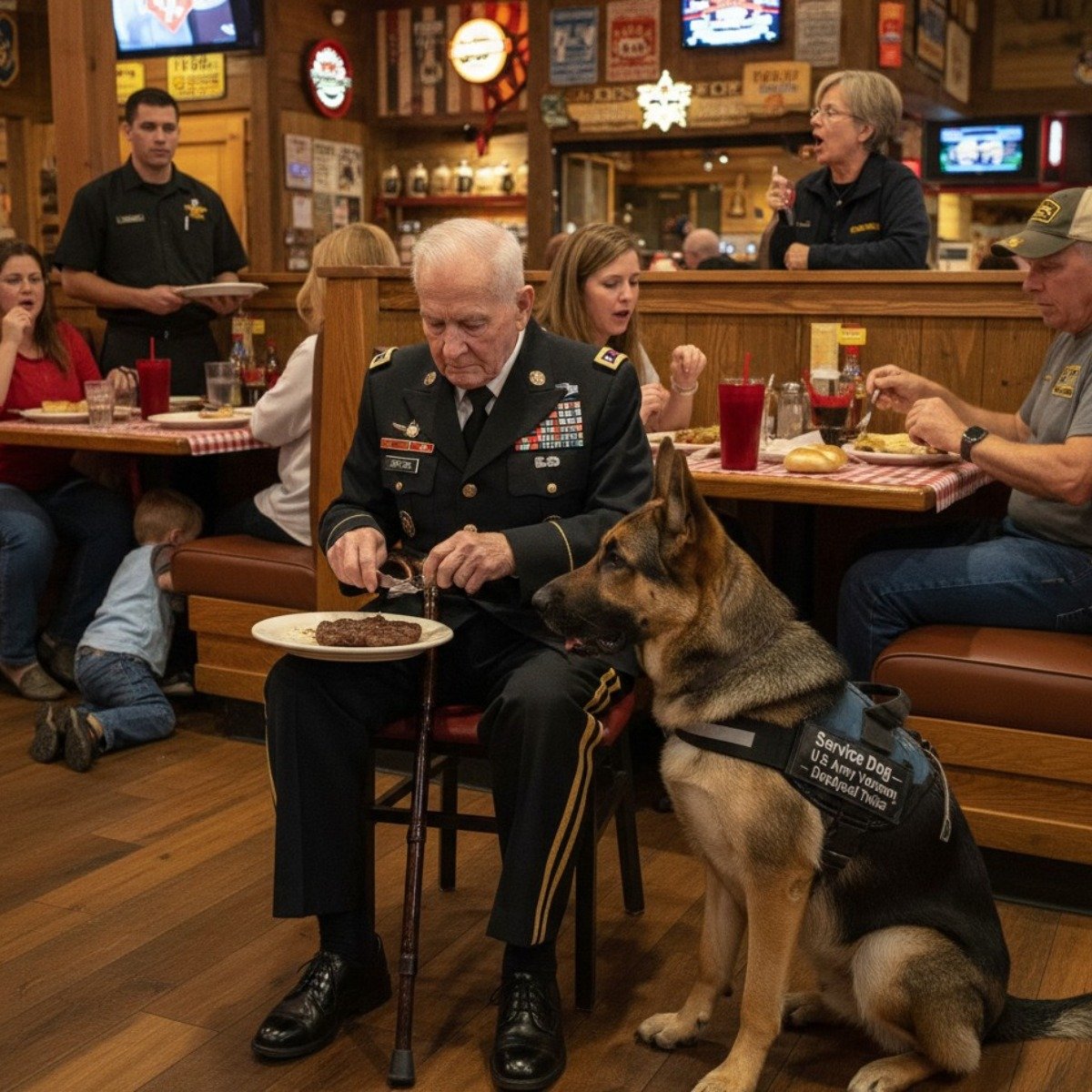
The restaurant was a portrait of American celebration, loud and cheerful. Yet, amidst the chaos, a scene of profound stillness unfolded. A German Shepherd service dog, a veteran himself, entered with his human partner. The dog’s composure was a lesson in dignity. His vest told a story of deployment and duty. This quiet dignity was met with a lack of understanding from a fellow diner, who saw only an animal out of place and not the soldier he was.
My father’s reaction was a quiet revelation. His soft comment, “I’d sit next to that dog any day,” was filled with a respect I had never heard him express so openly. It was a recognition of a shared experience, a bond between those who have faced the unimaginable. This was further illustrated when the old soldier shared his meal with the dog, a gesture that was not about feeding a pet, but about honoring a comrade. The dog’s disciplined patience until he was given permission to eat spoke volumes about a relationship built on mutual trust and survival.
When the complaining woman spoke again, my father became a teacher. In a calm, firm tone, he educated her—and everyone within earshot—that the dog was a soldier who had saved lives. He was medical equipment, a loyal friend, and a battle-tested veteran all in one. This was the moment my perception shifted. I realized service dogs are not just aids; they are living, breathing extensions of the soldier’s own spirit, guardians against the invisible wounds of war.
As the pair departed, my dad offered his final insight. He said the dog was still keeping the old soldier safe, not from physical danger, but from the isolation and difficulty of returning home. In that statement, I finally understood my father’ own silent struggle. The seat facing the door is his way of keeping himself safe, of managing a world that can feel overwhelmingly unpredictable. That dog was a mirror, reflecting back a truth about my father I had been too blind to see: that for a soldier, coming home is its own long and difficult campaign, and sometimes, the bravest battles are fought in silence, over a meal, in a booth facing the door.