The holiday season was supposed to be our sanctuary. My husband Ethan and I had promised each other a calm, intimate Christmas, a refuge from the world’s noise. That refuge was breached when his father, Derek, appeared at our door, a picture of shivering vulnerability with a new cane and a story about a health scare. Ethan’s instinct to protect kicked in instantly. I, wanting to be supportive, pushed down my unease and played the part of the gracious hostess. We made up the guest room, and Derek settled in, his gratitude seeming genuine at first.
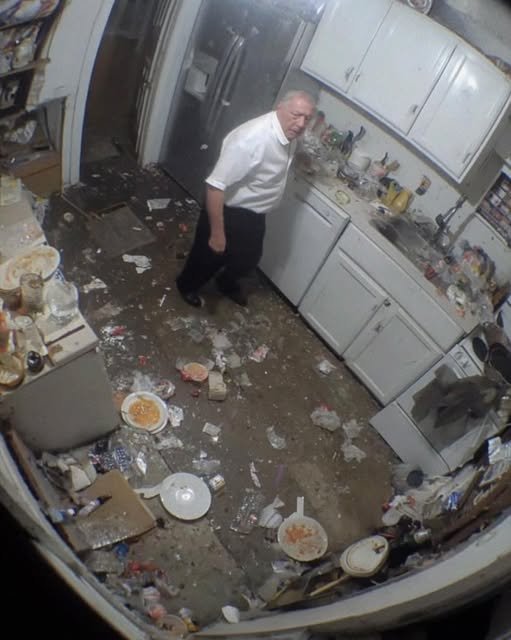
But a performance only holds if the audience believes it. Derek’s act began to show cracks when he thought his primary audience—Ethan—wasn’t watching. The frail man who needed help to the dinner table would later leave trails of crumbs and clutter for me to find. His kindly demeanor would slip, replaced by calculated, cutting remarks about my life and my marriage, always just soft enough to be deniable. When I brought these moments to Ethan, he rationalized them away, framing his father’s behavior as the product of fear and pride. I felt my voice growing smaller, my presence in my home becoming conditional.
A conversation with a family member unveiled the backstory. Derek had a history of this. He would enter a home, play on sympathy, and systematically undermine the woman of the house until the environment became unbearable. He had done it to Ethan’s own mother. The realization was a dark cloud over everything. This wasn’t a simple personality clash; it was a predatory pattern. My unease turned into a vigilant watchfulness. I needed proof, not just for Ethan, but to solidify the reality for myself against the gaslighting I was starting to feel.
The truth revealed itself in an unguarded moment. One midnight, I saw him without his prop, the cane, moving through our living room with an unsettling steadiness. He spoke to the empty air, outlining his plan to ensure I was the one to leave, confident in his son’s historic loyalty. It was a chilling soliloquy. Armed with this knowledge, I arranged to capture more evidence, leaving a phone recording in the room he now occupied. What it captured was worse than I imagined—contempt for me, for Ethan’s mother, and a smug satisfaction in his destructive control.
Presenting the evidence to Ethan was the most difficult moment of our marriage. I saw his world fracture as he watched his father’s mask fall completely away. The man he was protecting was a fiction. To his eternal credit, Ethan chose our present over a painful past. He confronted his father not with anger, but with a firm, devastating finality, asking him to leave. That Christmas, we lost an illusion but saved our home. We learned that sometimes, the kindest thing you can do for your family is to firmly show a toxic person the door, no matter what title they hold.