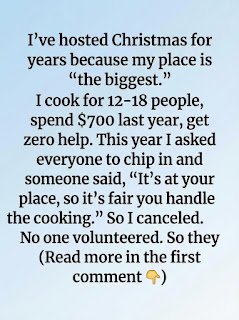
Year after year, I became the architect of our family Christmas. My living room was the stage, my kitchen the engine room. I took pride in creating a perfect day for everyone, but the toll was cumulative. The financial outlay for food and drink was significant, but the real cost was in the silent labor: the planning, the cleaning, the cooking, and the emotional labor of ensuring everyone else’s happiness. I’d finish each holiday drained, watching my family leave with full containers and full hearts, while I was left with only empty bowls and an emptier spirit.
This year, as the first decorations appeared in stores, a new thought arrived with them. I realized I was not just hosting; I was serving, and my service had come to be expected, not appreciated. I decided to test the waters. I floated the idea of a collaborative holiday, where the feast and the work could be shared. The response was not outright refusal, but a passive resistance. The underlying message was clear: the host provides. In their eyes, my home was the venue, and I was merely part of the furnishings, expected to function without support or thanks.
That moment of clarity led to a difficult announcement. I told my family I needed a break from hosting. I braced for negotiation or, at the very least, concern. What I received was radio silence. The tradition that had seemed so vital to everyone evaporated the moment I removed my labor from its center. At first, I wrestled with a sharp sense of failure. Had I been the only glue holding us together? But soon, the guilt was overshadowed by a profound and surprising peace. The burden I had carried for so long was finally laid down.
Christmas morning arrived without a checklist. The silence in my house was not empty; it was spacious. I cooked a single, delicious plate of food, savored a good book, and enjoyed the slow passage of the day. I missed the laughter, but I did not miss the frantic exhaustion. In the calm, I learned that a boundary is not a wall; it is a gate you choose to close so you can rest in your own garden. By stopping, I wasn’t destroying a tradition. I was revealing that it had become unsustainable. Sometimes, the healthiest thing you can do for a family is to show them what happens when you finally stop doing it all alone.