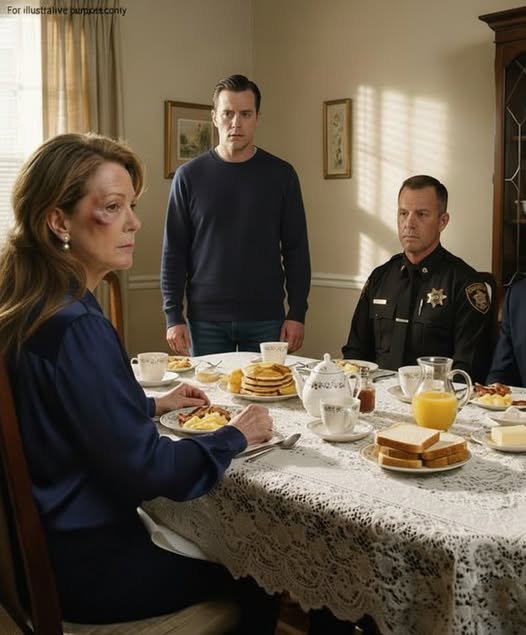
The blow landed, and then there was silence. My son, Daniel, had hit me, and I said nothing. I stood frozen in the kitchen, gripping the counter, trying to understand how we had arrived at this moment. The physical sting on my cheek was secondary to the chill that settled in my heart. He didn’t look sorry. He looked inconvenienced, as if my face had gotten in the way of his hand. Then he was gone, leaving behind a void filled only with the memory of the slammed door and the taste of blood on my lip.
This violence had a long, quiet history. He came home three years prior, and I, a widow aching with loneliness, was grateful for the company. Slowly, the dynamic shifted. My home became his domain. My opinions became silly, my routines became annoying, and my presence became something to be tolerated. I learned to make myself small, to anticipate his anger, to avoid sparking his irritation. The person I was began to fade, replaced by a nervous guest in my own life. The hit was not a beginning; it was the terrible punctuation mark on a sentence that had been written over years of whispered cruelty.
That night, after he left, I did not call for help. I moved through the motions of cleaning, my mind strangely clear. When I looked in the mirror and saw the mark he had left, I did not see a victim. I saw a woman who had reached her limit. I whispered to my reflection, “This is real.” And with that acknowledgment, a plan formed—not one of rage, but of profound, peaceful resolution. I would end this, but I would do it on my own terms, with the dignity the situation demanded.
As the sun rose, I moved through my kitchen with a sense of purpose I had forgotten. I unfolded the beautiful lace tablecloth, a family heirlomy reserved for celebrations. This was a different kind of celebration—the reclaiming of a life. I cooked a feast: golden biscuits, rich sausage gravy, buttered grits. I set the table with my good china, each piece placed with intention. I dressed carefully, covering the bruise not in shame, but as part of the presentation of my truth. I had invited three people to join us: my sister for family, our pastor for conscience, and the sheriff for consequence.
When Daniel came down, he expected a subdued mother ready to pretend nothing happened. The sight of the full table and the solemn guests stopped him cold. The breakfast was not a peace offering; it was the setting for his reckoning. With calm, unshakable voices, we presented him with the reality of his actions. There were no screaming matches. There was only the quiet, firm delivery of boundaries and the choices he now faced. He left that morning. The silence that returned to the house was not the empty silence of loneliness, but the peaceful silence of safety. I had finally chosen myself, and in doing so, I had come home.