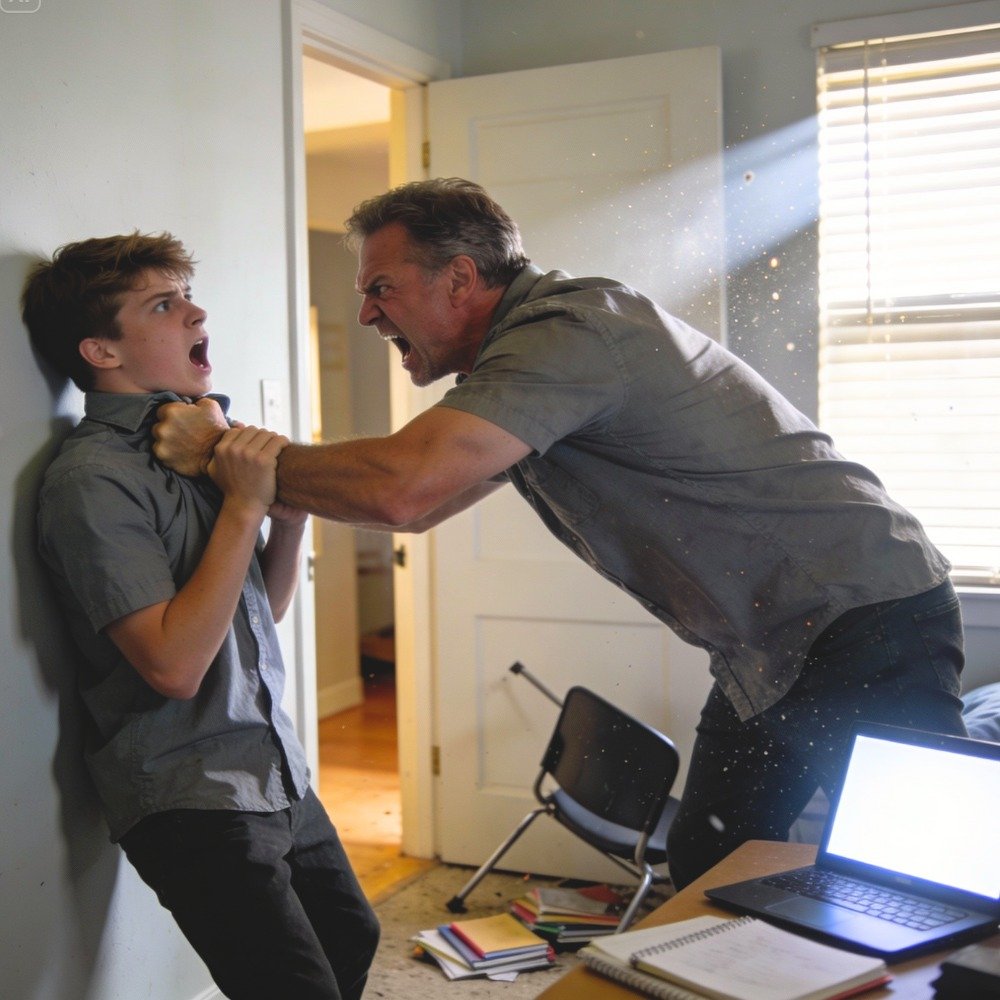
The slam of the door was like a thunderclap in the quiet of my room. My father’s frame filled the doorway, his expression a terrifying mix of fury and raw fear. “Who told your mother?” he roared, storming across the room. His hands gripped my shirt, pulling me up from my desk chair. He reeked of alcohol and desperation. My mother knew about Rachel, about the cabin upstate, about the separate bank account—the double life he’d been leading for three years. A life I’d discovered by accident and had been forced to keep silent about for half a year. He was convinced I was the leak.
I denied it, but his eyes searched mine, wild and cornered. My brother Ethan peeked in, only to be violently dismissed. Alone again, my father’s panic turned venomous. When I finally said the words aloud—“You destroyed it. You did this.”—his reaction was instantaneous and violent. His hand closed around my throat, crushing me against the wall until spots danced in my vision. When he released me, the threat he left with was chilling. I fled the house that night, my throat throbbing, the reality of what he’d done settling in like a chill.
Returning home was walking into the storm. My parents were entrenched in a war of words in the kitchen. My mother, her voice shaking but steely, asked me point-blank if I knew about the affair. I admitted I did, explaining how my father had sworn me to secrecy. The betrayal she felt was multiplied—not only by her husband, but by my silence. As they argued over lawyers and money, I found Ethan in his room. That’s when he told me, his voice small and defiant. He had been the one to send her the emails. He’d found our father’s laptop open and taken the evidence. At thirteen, he had borne the weight of truth I couldn’t carry.
The planned “talk” at a diner the next morning unraveled completely when Ethan confronted our father with a printed email. The attempted grab at Ethan’s wrist was the final proof my mother needed. We went straight to the courthouse. With photos of the bruises on my neck and testimony about the diner incident, a judge granted an emergency order keeping our father away. For a few weeks, we breathed easier, but the reprieve was short. A frightened call from Rachel, the other woman, warned us he was coming, enraged and threatening. We called the police and hid as he broke into the house, shattering a window and then a bedroom door to reach us. The police arrived just in time.
His arrest and subsequent prison sentence created a permanent rift. The family we had known was gone. In its place, my mother, my brother, and I forged something new. We navigated the aftermath—therapy, graduation, rebuilding trust. Years later, a letter from prison arrived, full of justification and blame, devoid of remorse. It confirmed what we already knew: some people never change. They only shift the blame. Our freedom came from accepting that we were not responsible for his choices. Our family was no longer defined by his lies, but by our mutual resilience and the painful, liberating truth that my brave little brother had finally spoken.