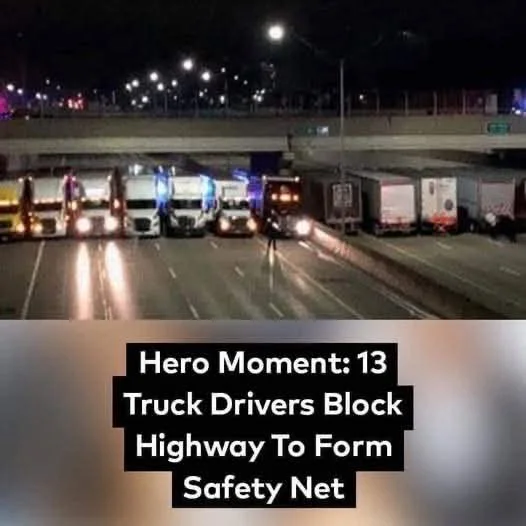
We often measure our days by efficiency and speed, judging interruptions as pure setbacks. But a remarkable event on a Michigan highway recently challenged that entire perspective. What appeared to be a massive, inexplicable traffic jam was, in reality, a carefully orchestrated vigil. Under a bridge on I-696, thirteen semi-trucks parked in a precise line, bringing all lanes to a complete standstill. The drivers sat in their cabs, not stalled by accident, but parked with purpose. They were part of a rescue mission, one where their vehicles were not tools of transport, but instruments of compassion.

The mission began with a single, heartbreaking phone call to State Trooper Michael Shaw. A person was in distress on the bridge overhead, threatening to jump. Shaw knew his priority was communication and connection, working to convince the individual to choose life. Yet as a responsible officer, he also had to plan for every possibility. Looking at the vast, empty space under the bridge, he saw a deadly drop. Then, looking at the traffic flowing beneath, he saw a potential solution. He needed to fill that void with something that could offer a chance, and he needed the help of the truckers sharing the road.
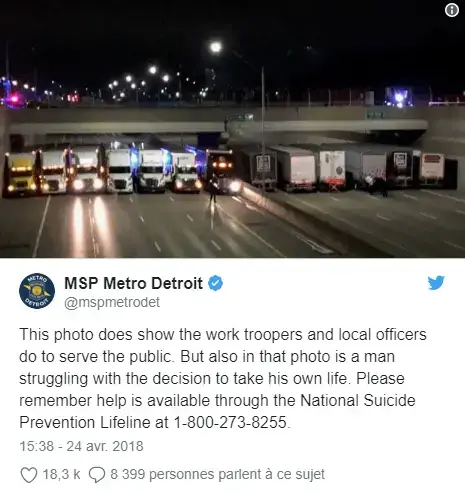
When the request went out, it was met with immediate agreement. These professional drivers, who navigate tight deadlines and long hauls, understood that this was a different kind of urgent delivery. They coordinated to position their trailers, creating a continuous, high canopy of metal. This wasn’t about getting somewhere faster; it was about making sure someone else could have a future. They turned their rigs into a collective safety net, a symbol of solidarity that the person on the bridge could likely see from above—a tangible sign that people below cared.
The wait that followed was a test of patience for everyone involved, but especially for those drivers. They stayed put, blocking the highway for four hours as delicate negotiations continued. They became silent guardians, their presence a crucial part of the crisis team. Their sacrifice of time and schedule was a selfless gift, an offering made without any guarantee of the outcome. Ultimately, that gift was received in the best way possible: after hours of skilled and compassionate talk, the individual was secured and brought to safety.
As the trucks finally rumbled back to life and continued their journeys, they left behind more than cleared asphalt. They left a powerful story. In a world that can feel indifferent, this incident shouts that community still exists. It shows how ordinary people, when called upon, can perform extraordinary acts of kindness. The trucks have moved on, but the message remains parked firmly in our minds: sometimes, the best way forward is to stop, and the most important cargo we can carry is hope for a stranger.