In our family, autism was a language we learned to navigate without sound. My brother Keane, diagnosed at three, was nonverbal. Our communication was built on patience, routine, and reading the subtle cues in his behavior. I loved him without condition, but I confess I had internalized a story of his world being fundamentally separate from mine—a parallel track we walked beside, but not together. When he came to live with me after our parents died, I focused on providing care, stability, and quiet respect for his routines. I never imagined that my newborn son would become the bridge that connected our two worlds.
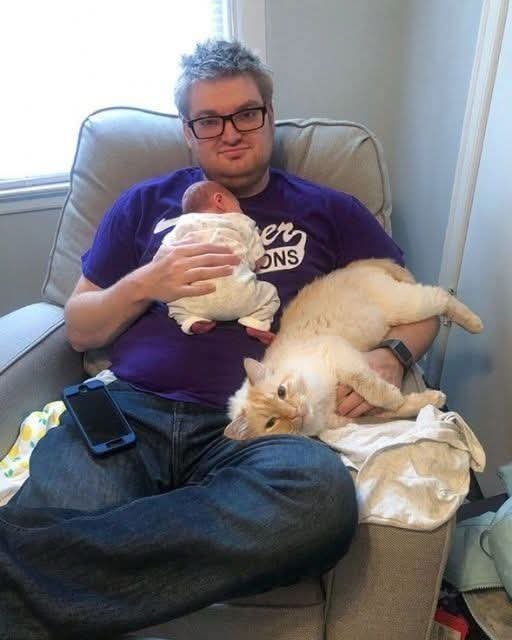
The catalyst was as simple as a baby’s cry and a hum. One chaotic morning, I rushed from the shower to find Keane, who never initiated physical contact, expertly soothing my infant son, Owen. He was rocking him gently, applying a perfect, rhythmic pressure to his back. The scene was shocking in its natural grace. Then Keane spoke. “He likes the humming,” he whispered, referring to the soft, constant tone he’d made for years. In that moment, my entire framework shattered. His humming wasn’t just a stim; it was a deliberate, soothing tool, a connection he had actively forged with his nephew. His silence was not an absence of thought, but a different way of being I had failed to fully engage.
What followed was a profound lesson in presuming competence. As I tentatively invited Keane into caregiving, he blossomed. He fed Owen, changed him with methodical care, and began to offer verbal insights about our household. Each small sentence was a revelation. I realized with a sinking heart that for years, I had been accommodating his autism without truly collaborating with him. I had created a world for him, not with him. The guilt was immense. I had mistaken his lack of speech for a lack of desire to connect, and in doing so, I had placed a ceiling on our relationship that he had never agreed to.
This journey wasn’t without its tremors. When a minor mishap with Owen triggered a crisis of confidence in Keane, his fear was not of the baby crying, but of losing the hard-won connection he had just found. His tearful whisper, “I ruined it,” spoke volumes about his longing to belong and contribute meaningfully. My reassurance that he was not broken, that mistakes are human, seemed to land with the weight of a lifetime of unspoken words. It was a pivotal exchange that moved us from caregiver and charge to true siblings and allies.
Our experience is a testament to the danger of low expectations. Keane didn’t change who he was; he was finally given an opening to show more of himself. He now shares his gifts beyond our home, volunteering in a setting that appreciates his unique perspective. My son’s first word being “Keen” is the perfect symbol of this new chapter: a clear, loving recognition of the person who was always there. This story isn’t about words conquering silence. It’s about how creating the right space—one of invitation, not assumption—allows every kind of voice to be heard and valued.