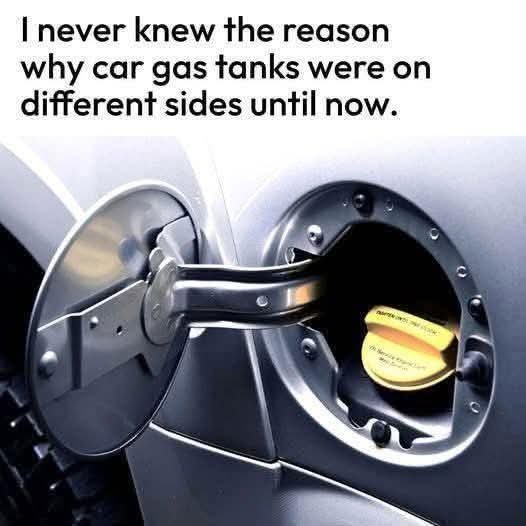
It’s a universal driving experience: the awkward shuffle at the pump when you realize your gas tank is on the other side. Before you blame the car company, know that its placement is far from an accident. The side of your car that hosts the fuel door is the endpoint of a complex engineering puzzle solved during the vehicle’s earliest design stages. It’s a compromise between structure, cost, and real-world use.
Imagine the underside of your car as a crowded, three-dimensional puzzle. The engineers must route the fuel filler pipe from the tank to the side of the car without interfering with critical parts like the exhaust, drivetrain, or brake lines. They choose the cleanest, most direct path. This practical necessity often overrides any desire for symmetrical design. Once this architecture is set, changing it would require a redesign of the entire rear chassis—a prohibitive expense for what seems like a minor feature.
Beyond the engineering, cultural driving habits exert a strong influence. American drivers, sitting on the left, overwhelmingly prefer a left-side fuel door. It allows them to step out onto the curb side, not into a traffic lane, to handle the pump. This preference was so strong that Ford formally researched and confirmed it decades ago. In right-hand-drive countries, the opposite is true. Manufacturers cater to these regional norms to make the refueling experience intuitively safer for the driver.
There’s a hidden social benefit to this variety. Economist Robert Frank points out that if all fuel doors were on the same side, gas stations would be perpetually clogged. Half the pumps would sit unused while drivers queued for the other half. The natural variation in fuel door placement acts as an unconscious traffic control system, distributing cars evenly across available pumps and making the process more efficient for everyone.
Forgetting which side your tank is on is a rite of passage. Luckily, automakers provide a discreet reminder: a small arrow on your fuel gauge. As we transition to electric vehicles, the fuel door is becoming a charging port, but the design challenge remains. Engineers are now deciding whether ports belong on the front, rear, or side, weighing the same factors of convenience, safety, and component packaging. The location may change, but the thoughtful logic behind it stays the same.