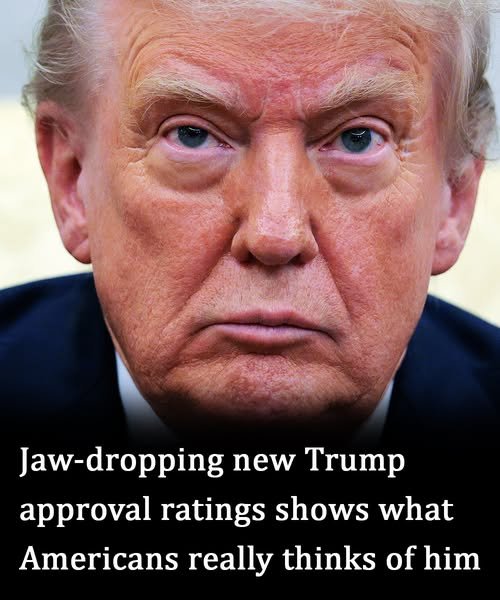
The latest national polling on Donald Trump’s presidency reveals less about the man in the Oval Office and more about the country he leads. The numbers tell a story of a nation fractured, living in parallel political universes with vastly different realities. This isn’t merely a dip in approval ratings; it’s a snapshot of a profound cultural and political schism that defines the modern American experience.
At the heart of this division is a fundamental disagreement over basic facts. The President enjoys an overwhelming 82% approval rating among Republicans, a testament to his iron grip on his party. Yet, among Democrats, that number plummets to a mere 6%. For independents, the picture is only slightly less polarized. This split demonstrates that support for Trump is no longer just a political preference; for many, it is a core part of their identity, while for others, opposition to him is equally central.
This divide extends into how Americans consume information and trust one another. The poll finds that a majority of citizens rarely or never trust political news that comes from a source with an opposing viewpoint. This erosion of a shared informational landscape makes constructive dialogue nearly impossible. As one expert noted, every criticism is seen as “fake news” to supporters, and every defense is dismissed as “propaganda” by opponents, leaving no common ground for compromise.
The President’s management style, characterized by defiant social media posts and a dismissal of negative data as “phony,” simultaneously deepens these divides and strengthens his connection to his base. His reaction to the poll is a perfect microcosm of this dynamic: while his supporters see a leader courageously battling a biased system, his critics see a leader detached from the genuine concerns of the majority of the population.
What emerges from the data is a portrait of a weary nation. The initial fervor of the Trump era has given way to a persistent fatigue, marked by political stalemate and mutual distrust. The challenge ahead is not simply whether the President can reverse his polling decline, but whether the country itself can find a way to heal the deep divisions that his presidency both reflects and amplifies. The future of American political discourse may depend on the answer.