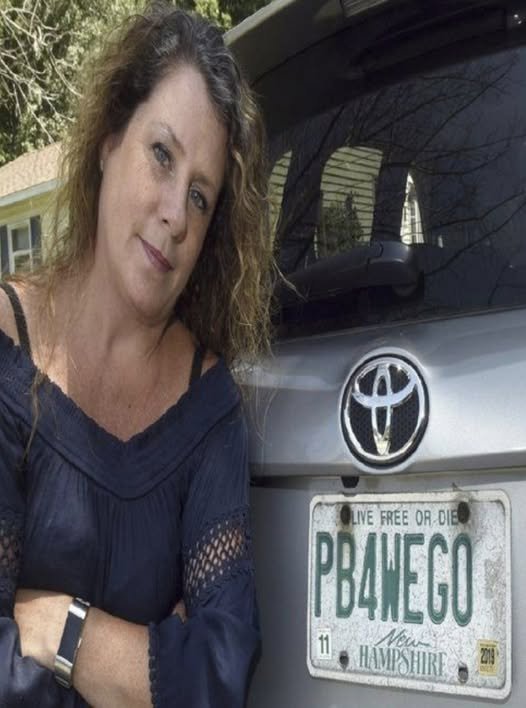
For a decade and a half, Wendy Auger’s vanity plate was a landmark of relatable humor on New Hampshire roads. “PB4WEGO” was a lighthearted, universal signal among parents—a testament to the logistical hustle of family outings. It generated grins, not grievances. That’s why the state’s recent declaration that the plate is now “offensive” feels so jarring and absurd to its owner and a growing chorus of supporters.
The notice from the state arrived without warning, reclassifying a beloved snippet of parenting life as inappropriate. To Auger, the move was more than an inconvenience; it was an erasure of a small but meaningful part of her identity. The plate had always been about fostering a moment of recognition, a quick, shared laugh that said, “I’ve been there, too.” The state’s action suggested that this innocent connection was somehow a matter for correction.
The government’s justification lies in longstanding prohibitions against vulgarity. However, applying that standard to this phrase has sparked widespread skepticism. Critics argue it represents a robotic enforcement that ignores context, intent, and community standards. Auger’s challenge has thus become a case study in how well-intentioned regulations can misfire, penalizing harmless expression while fueling debates about the limits of administrative authority.
The groundswell behind Auger underscores a public desire to protect spaces for benign, personal expression. Her story resonates because it highlights how quickly ordinary freedoms can shrink when interpretation lacks nuance. Defending her plate isn’t about defending potty humor; it’s about defending the right to a little whimsy, and the common sense to know the difference between what’s truly offensive and what’s just authentically human.