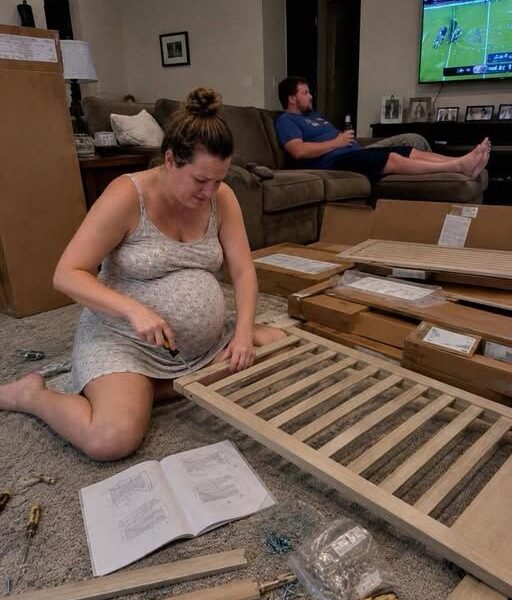
Pressure can make you accept a story you’re desperate to believe. At thirty-two, worn down by my mother’s constant matchmaking, I accepted a date with Richard. He was presented as a catch with one complication: deafness. To me, it wasn’t a complication but an invitation. In his silent world, I imagined a escape from judgment. I learned sign language, quit my demanding career, and married him, finding grace in our careful, visual communication. When I became pregnant, I felt my life was finally falling into a meaningful, if unconventional, shape. I was building a family with a man I admired.
The illusion lasted until a mundane moment in my sixth month. Turning in our kitchen, I heard a voice that shouldn’t have existed. “I’m not deaf,” it said. My husband, Richard, was speaking. The truth spilled out: the accident was fake, the disability an act. It was a test, conceived by his mother, to find a woman loyal enough to overlook his perceived flaw. In reality, the flaw was the deceit itself. The silent refuge I had built my life within was a soundproof cage, and he had held the key all along. The floor beneath me didn’t just crack; it vanished.
The betrayal was multidimensional. My partner, his mother, and even my own mother had collaborated in this experiment on my heart. I had given up my professional identity, learned a new language, and carried his child, all under false pretenses. The rage was volcanic, but beneath it was a profound grief for the relationship I thought I had. That man—the gentle, silent listener—had never existed. I was left to mourn a ghost while housing his growing child. The path forward seemed impossibly dark, shrouded in anger and confusion.
Healing began with a question from a therapist: “Did you love him?” The answer was complex. I loved the idea of him—the strong, silent type who valued my patience. He, in turn, loved the idea of me—the selfless caregiver. We had fallen for archetypes, not people. Our daughter’s birth created a new, undeniable reality that forced us to engage as our true selves. In the messy, beautiful struggle of parenting, we started to see each other. Therapy sessions were grueling, demanding absolute transparency. We had to dismantle the fantasy to see if anything real remained.
Today, decades later, ours is a love story with a scar at its center. We did not simply move on; we transformed. The lie is a chapter in our history, a painful lesson in the cost of inauthenticity. It taught us to prize honest communication above all else, to speak our fears and faults aloud. We have watched our children grow in a home where mistakes are acknowledged and amends are made. The man I married was a fiction, but the man I chose to stay with—imperfect, remorseful, and committed to growth—is profoundly real. Our happiness is hard-won, and stronger for it.