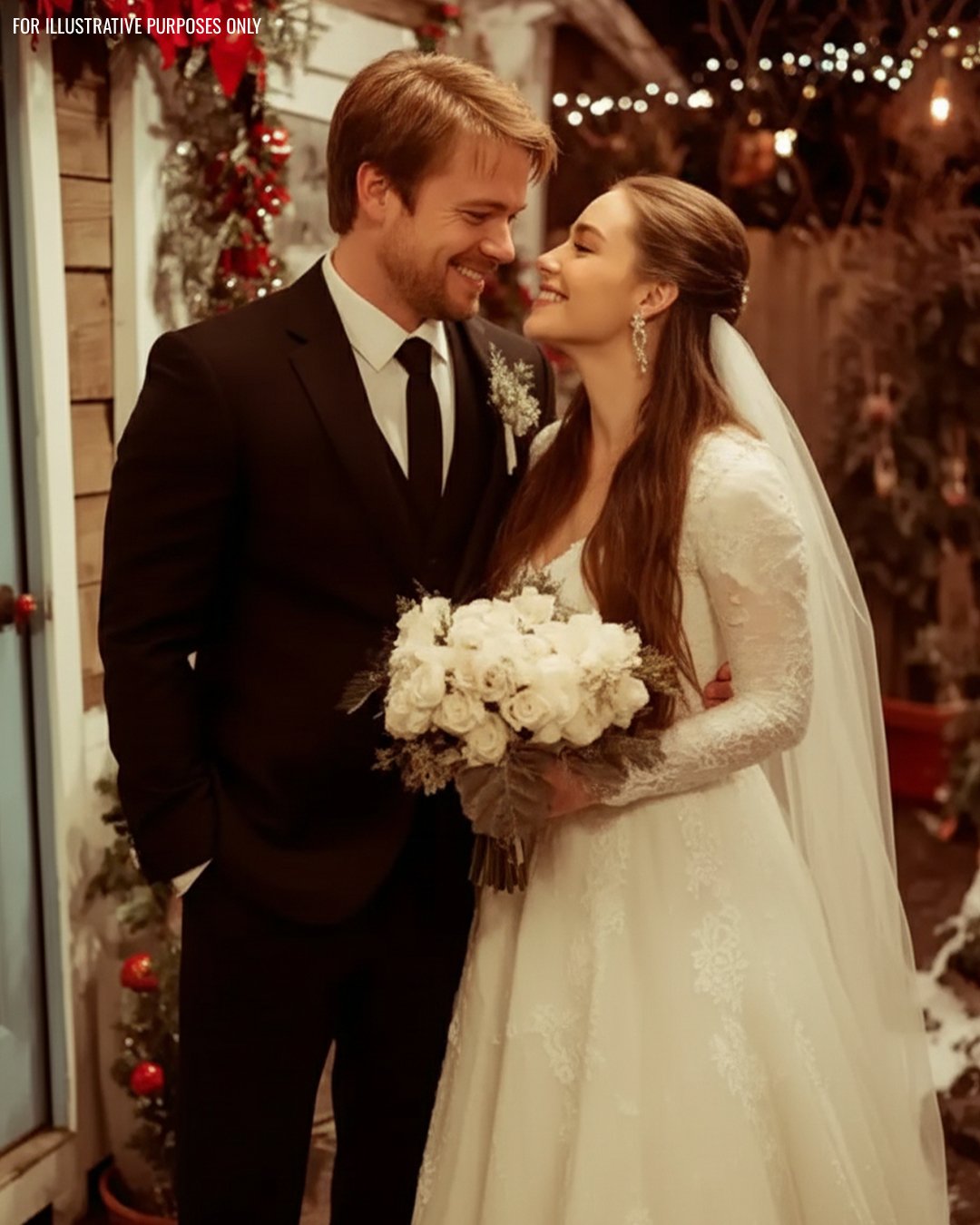
I thought I knew the shape of Matthew’s past. He was a widower, his wife taken too soon in a tragic accident. His love for his daughter, Mia, and the gentle way he carried his grief drew me in. When we married, I was ready to embrace the life he had, including the home filled with another woman’s memories. I believed openness was the bedrock of our new union. I was wrong.
The first crack appeared on our wedding night. Tucked away in my nightstand was a letter, hidden like a landmine. The warning on the envelope—”If you’re reading this, he didn’t tell you the truth”—sent a jolt of fear through me. As I held it, a noise from the kitchen distracted me. I rushed out to find a broken glass. It was a brief interruption, but it was enough. When I returned, the letter had vanished. In the quiet of our new bedroom, I felt the first chill of isolation.
Days passed in a strained silence. The breakthrough came from the most unexpected place: Mia. Her drawing, showing a sick woman and a child silenced by a secret, was a cry for help. “It makes my heart hurt too,” she confessed. She led me downstairs and showed me a plastic tub, a hidden archive of illness that contradicted everything I’d been told. The accident was a fiction. The reality was slower, more medical, and undoubtedly more agonizing.
Then, Mia handed me the missing letter. She had taken it, a small guardian of her father’s painful secret. Reading it, my anger melted into profound sorrow. The letter was from Matthew’s wife. With clear, loving foresight, she explained her terminal illness and predicted that her husband might hide the brutal truth to cope. She asked the finder to care for him and for Mia. Her words painted a picture not of deception, but of devastating grief.
Armed with this understanding, I waited for Matthew. I showed him the open tub and placed the letter in his hands. “You lied,” I said, my voice steady but soft. He didn’t deny it. He shattered, his body wracked with sobs as he admitted he couldn’t face the relentless story of cancer. He had invented a cleaner ending because the true one was too heavy to utter. In that moment, I saw not a liar, but a man drowning in memory. Our fresh start began right there, in the wreckage of the old truth. We chose to move forward not by ignoring the past, but by finally acknowledging its true weight, together.