To the outside world, we were the epitome of success. A beautiful home in Buckhead, a charming son, a husband with a gleaming career. I was the supportive wife, the reliable anchor. But that anchor was tied to a lie. The cracks showed in my son’s worried silence, in the strange phone calls my husband took behind locked doors, in the financial controls I mistook for care. The final crack became a chasm at the airport. After dropping off Quasi, my son Kenzo pulled me close and shared a secret that unmoored my entire reality. He had heard his father plotting with someone to “take care of” a problem—a problem that was us. His plea was simple: “Please believe me this time.” And finally, I did.
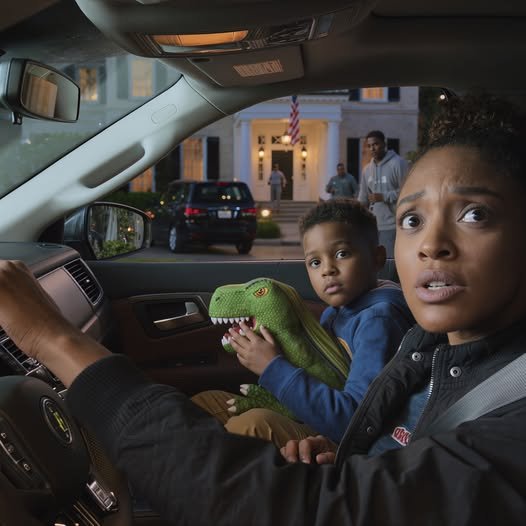
Driven by a dawning horror, I took Kenzo not home, but to a hidden vantage point. We sat in the dark, watching our elegant home. The arrival of the unmarked van felt like a scene from a film, until the man used a key. My key. The subsequent fire was not a random blaze; it was a violent, deliberate erasure. As the windows burst and flames licked the sky, I understood the true purpose of Quasi’s “business trip.” It was an alibi. The loving text he sent me as our house burned was the cruelest part of the script, a line delivered from a safe distance to a wife and child he believed were already dead.
Homeless and hunted, I reached out to the only lifeline my prescient father had left me: Attorney Zunara. In her secure office, the awful puzzle was assembled. Quasi’s business was a shell, his wealth an illusion built on my money and massive gambling debts. We were not loved; we were liabilities. The life insurance policy was the exit strategy. Zunara helped us strategize not as victims, but as investigators. We slipped back into the smoldering wreckage of our home, retrieving a trove of evidence Quasi had foolishly kept—a ledger of his debts and dealings, and the burner phones that connected him directly to the arsonists.
We lured Quasi to a public meeting, allowing him to believe he could reason or threaten his way out. Surrounded by police, I watched the performance of concern drop from his face. He spoke not of love, but of money and inconvenience. He called our son a “freak kid.” His mask, once so carefully maintained, was gone forever. His attempt to take me hostage in his final panic only cemented his guilt for the watching officers. The law took over, and with the evidence we provided, his conviction was swift. The perfect husband was revealed as a would-be murderer.
Rebuilding a life after such a betrayal is a daily act of courage. Kenzo carries the memory, but not the burden. He is proof that resilience can grow in the most damaged soil. I carry the lessons: to trust my instincts, to hear the whispers, and to understand that safety is not a house, but the people who would never dream of setting it on fire. Our story is a warning about the secrets behind closed doors, and a testament to the power of a child’s voice and a mother’s choice to finally listen.