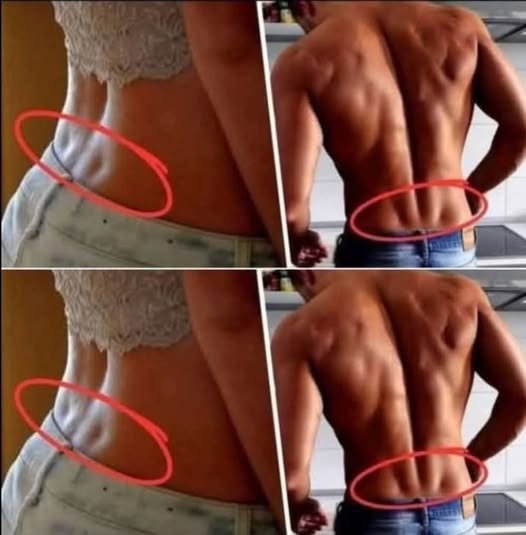
Those two little hollows on the lower back, often visible just above the waistband, are a source of curiosity for many. Commonly dubbed Venus dimples, they are natural indentations that have captivated attention from ancient art to modern fitness blogs. They stand as a timeless, subtle emblem of physical form that crosses cultures and eras, often associated with an ideal of health and beauty.
From a biological standpoint, these dimples are a straightforward structural phenomenon. They occur where the skin is directly attached via a ligament to the pelvis. This creates a permanent small dip that no amount of exercise can generate if the underlying connective tissue isn’t present. Your genes decide if you have this specific anatomical setup. Think of them as inherited beauty marks, shaped by bone and ligament rather than pigment.
The conversation isn’t limited to one gender. Men possess them as well, and in that context, you might hear the term Apollo dimples. The underlying message is consistent: these features are often noticed on bodies that are fit and well-conditioned. When someone has a strong core and low body fat, these dimples can look like elegant punctuation marks on a sculpted back, making them a passive yet noticeable sign of physical dedication.
Over time, a mythology of wellness has grown around them. Beyond just looking fit, some suggest that these dimples point to robust pelvic health and circulation, potentially enhancing sensory pleasure. Though this remains in the realm of theory and tradition rather than concrete science, it feeds into the dimples’ intriguing reputation. Ultimately, their most concrete association is with leanness and muscle tone, which is why they are so prominent in fitness culture.
In our current visual world, these dimples are frequently showcased as a hallmark of an achieved physique. However, it is critical to remember that they are not a trophy for health, nor is their absence a shortcoming. Human bodies are wonderfully diverse, and these dimples are simply one possible variation in our anatomical design. True well-being is found in a loving relationship with your body and a commitment to your personal health, not in the pursuit of a specific, genetically-determined feature. Celebrate your body’s story, dimples or not.